
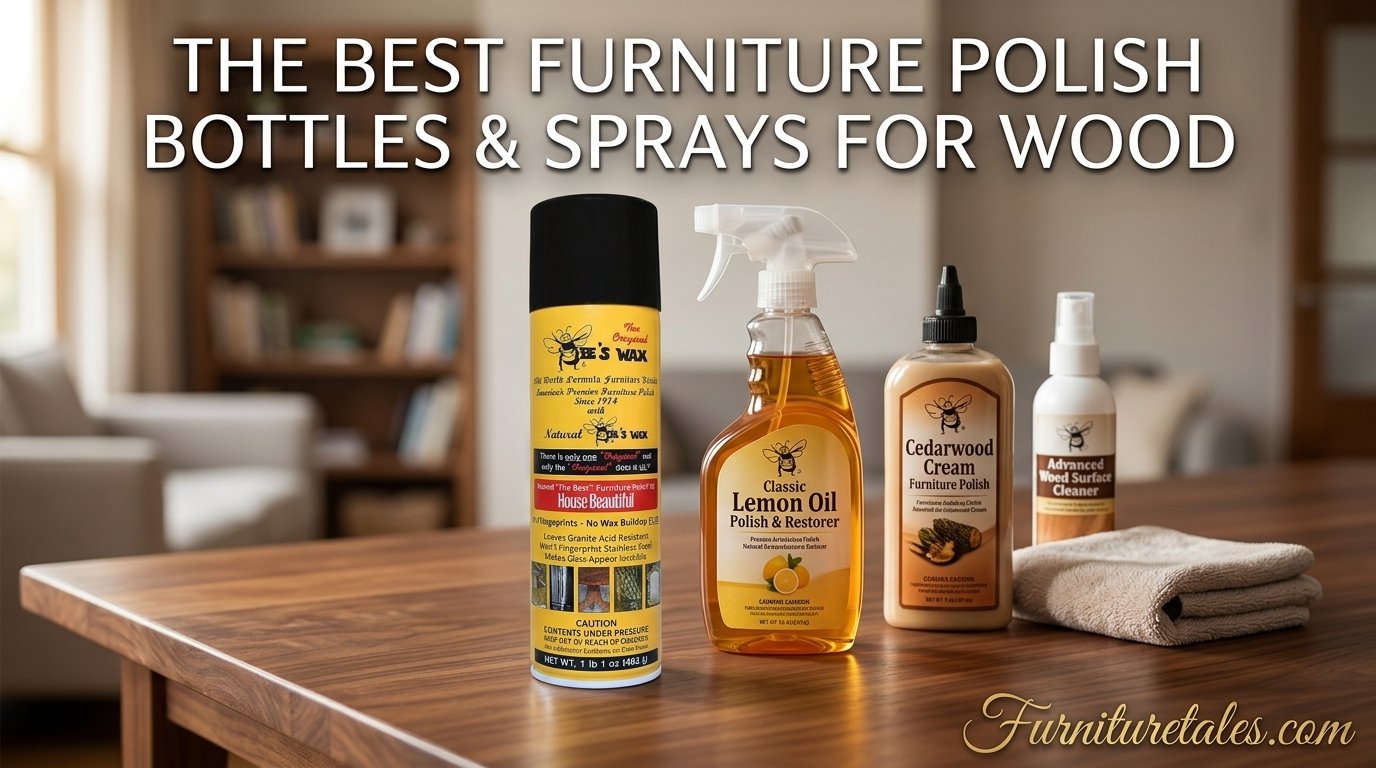
Best Furniture Polish: Top Picks for Wood, Veneer, and Everyday Surfaces
A dull coffee table, a streaky dresser, a dining table that never quite looks clean. The right polish fixes all three, and the wrong one makes them worse. Here is how to choose, plus ten products we think are worth your shelf space.

1. Why Furniture Polish Matters More Than You Think
Most people treat furniture polish as a finishing touch, something you spray on when guests are coming. In reality, it is closer to skincare for wood. Wood is an organic material. It breathes, it absorbs, and it reacts to the air in your home, to sunlight, to cooking residue, to the oils from your hands. Over months and years, all of that leaves a film on the surface. The finish underneath can still be perfectly good, but you cannot see it through the haze.
A good polish does a few jobs at once. It lifts light dust and fingerprints, it fills the tiny scratches and pores that scatter light and make a surface look dull, and it leaves behind a thin layer that makes the next round of dusting easier. Depending on the formula, it can also feed dry wood, add a little water resistance, and hide minor wear. What it cannot do is repair deep gouges, fix water rings that have gone through the finish, or replace a proper refinish when a piece is truly worn out.
What polish does and what it does not do
- Restores sheen: A thin film or wax layer evens out the surface so light reflects instead of scattering.
- Reduces visible wear: Oils and waxes darken and fill hairline scratches, so they stop catching your eye.
- Protects against everyday life: A polished surface resists dust, light moisture, and fingerprints a little better than a bare one.
- Does not replace cleaning: Polish over grime just seals the grime in. Cleaning comes first, and our guide on how to clean wood furniture walks through that step in detail.
- Does not fix structural damage: Deep scratches, peeling veneer, and burnt-through finishes need real repair work.
The market is crowded, and the labels do not help. Some bottles are mostly solvent and silicone. Others are real beeswax paste that you buff by hand. Some are meant for a weekly wipe-down, others for a once-a-season treatment. Choosing between them is easier once you understand what each type does, which is where we are headed next.
Signs your furniture is asking for polish
Wood rarely complains loudly. It sends small signals, and once you know them, you will start noticing them everywhere. A tabletop that looks hazy under a lamp even right after dusting is a classic one. So is a dresser whose drawer fronts look lighter and flatter than the sides. Wood that feels slightly rough or “thirsty” under your palm, arms of chairs that look worn and pale where hands rest, and cabinet doors with a dull patch near the handle all point the same way. In each case the finish is still there, but the light-reflecting surface has thinned, been scuffed, or been coated in a film of household residue.
It also helps to look at furniture from a low angle. Crouch beside a table and look across the surface toward a window. Streaks, smears, and dull zones that disappear when you look straight down become obvious. That angle is how professionals judge whether a surface needs work, and it takes ten seconds.
Why a little shine goes a long way
There is a practical side to appearance. A surface that is slightly smoother and slicker is also easier to wipe, which means less scrubbing and fewer abrasive cleaners over the life of the piece. Wood that is conditioned from time to time is also less likely to dry out and crack at the joints in winter. None of this is magic, and none of it replaces good habits such as using coasters and keeping furniture out of harsh sun. But as small, regular investments go, a bit of polish returns a lot for very little effort.
Want to see what is popular right now? Browse top-rated furniture polishes on Amazon.
Shop Furniture Polish on Amazon2. Types of Furniture Polish: Wax, Oil, Spray, and Cream
Before you compare brands, it helps to know the four main families. Almost every product on the shelf falls into one of them, or blends two.
Wax and wax-oil polishes
Paste or soft-wax products, usually built on beeswax or carnauba, often blended with orange oil or another conditioning oil. You rub a small amount into the wood, let it settle, then buff to a soft glow. The result is a deeper, more natural sheen than most sprays give you, and it tends to last longer. The tradeoff is effort. Waxes take more time to apply, and over-applying leaves a tacky film.
Oil-based polishes
Lemon oil and similar products are typically mineral-oil based with fragrance added. They are fast, easy, and good at making dry wood look richer. They also tend to darken the surface slightly, which many people like on older, unfinished, or oil-finished pieces. They are less suited to high-gloss lacquered finishes, where they can leave streaks if you use too much.
Aerosol and trigger sprays
The convenience category. You spray, you wipe, you are done in a minute. Many sprays are formulated to clean and polish in one step, which makes them ideal for a weekly routine on sealed furniture. Some rely on silicone for the slick, shiny look. That is not automatically bad, but it does matter if you ever plan to refinish the piece, since silicone residue can interfere with new paint or stain.
Creams and emulsions
Creams sit between waxes and sprays. They usually combine a gentle cleaning action with a light conditioning layer, and you wipe them on with a soft cloth. They are easy to control, rarely streak, and suit antiques and delicate pieces well.
| Type | Best For | Effort | Sheen | Watch Out For |
|---|---|---|---|---|
| Wax / wax-oil | Solid wood, antiques, seasonal care | Medium to high | Deep, warm glow | Build-up if overused |
| Oil-based | Dry, older, or oil-finished wood | Low | Rich, slightly darker | Streaks on glossy finishes |
| Spray | Weekly upkeep on sealed surfaces | Very low | Clean, even shine | Silicone residue, over-spraying |
| Cream | Delicate and antique pieces | Low to medium | Soft satin | Needs a clean buffing cloth |
None of these is universally better. A busy family with a laminate-topped dining table and a collector with a hand-rubbed walnut chest of drawers need completely different products, and both would be right.
The silicone question
If you spend any time reading furniture forums, you will run into strong opinions about silicone. Some woodworkers avoid it entirely because it can interfere with later refinishing, leaving small “fisheyes” where new finish refuses to spread. Others point out that for a modern sealed table you will never refinish, a thin silicone film is harmless and makes dusting easier. Both camps are right for their own situations.
The practical takeaway: if a piece is an heirloom, a project you may restore, or something you intend to repaint, lean toward natural waxes and oils, or at least check the label for silicone-free claims. If it is a mass-produced sealed table that will stay as it is, a spray is a perfectly reasonable choice. Just do not alternate between very different products on the same surface without cleaning in between.
What about homemade polish?
Mixtures of olive oil and vinegar, or oil and lemon juice, turn up in every list of cleaning hacks. They can make a surface look better for a day. The trouble is that food oils can go rancid over time, attract dust, and leave a sticky film that is harder to remove than the original grime. Purpose-made polishes are balanced so they dry, buff, and age properly. For the small cost involved, a proper product is usually the better route, especially for furniture you care about.
Not sure which family fits? Compare wax, oil, spray, and cream options side by side.
Compare Polish Types on Amazon3. What to Look For Before You Buy Furniture Polish
We judged every product here against the same handful of questions. You can use them as your own checklist, whether you end up with one of our picks or something else.
1. What is the finish on your furniture?
This is the single most important question, and most buyers skip it. Most modern furniture is sealed with a clear coat of lacquer, polyurethane, or varnish. The polish sits on top of that coat, not in the wood. Older pieces, oiled teak, and some rustic items have a penetrating finish, which absorbs oils and waxes directly. A quick test: put a drop of water on a hidden spot. If it beads up and sits there, you have a sealed finish. If it darkens the wood within a few minutes, the finish is thin or oil-based.
2. Ingredients you can live with
Read the label. Natural waxes and citrus oils smell pleasant and are easy to work with. Solvent-heavy aerosols are fast but have stronger fumes and need ventilation. If you have kids, pets, or sensitivities, look for products that state clearly what they contain and what precautions to take. Our guide on how to stop cats from scratching furniture covers a related issue: when pets share your home, everything you put on a surface matters a little more.
3. Silicone or no silicone
Silicone gives sprays that instant mirror shine and makes dusting slick. It can also build up and complicate future refinishing. If you are the type who repaints or restains pieces, check out our walkthrough on how to paint furniture and keep silicone-heavy products away from anything you plan to redo.
4. Scent
Lemon, orange, and beeswax scents are the standards. Strong fragrance fades quickly in a ventilated room but can linger in a small bedroom. Pick something you will not mind smelling for a few hours.
5. Application method
Honest question: will you actually use it? A beautiful beeswax paste that takes twenty minutes per table will sit in the cabinet. A spray that takes sixty seconds gets used every week. The best polish is the one that fits your habits.
6. Surface variety
If you want one bottle for the whole house, look for multi-surface formulas that handle wood, laminate, and veneer. If you have a few prized pieces, buy a dedicated wood polish for them and a general spray for everything else.
7. Value
Paste waxes cost more per container but last a very long time, since you use tiny amounts. Aerosols cost less up front but run out faster. Compare cost per use, not just sticker price.
8. Size, price, and how long it will last
Container size is easy to overlook, and it affects value more than you might expect. A large aerosol can look like a bargain, but a small tin of wax can treat far more furniture because you use so little. Think in terms of how many pieces you own, how often you plan to polish, and how long the product keeps. Waxes and creams generally keep well when sealed, while aerosols can lose propellant over time, so avoid buying more than you will use in a year or two. Store everything somewhere cool and dry.
9. Reviews and real-world feedback
Ratings are useful, but read them with a critical eye. Look for reviews that mention the type of furniture and finish, since a polish that is perfect on a dark antique can be a disaster on a light laminate. Ignore complaints that clearly come from misuse, such as over-application or using the wrong product on painted surfaces, and focus on consistent patterns, like “leaves streaks” or “great scent, lasts weeks.”
Ready to start shopping? See current prices and ratings on Amazon.
Check Prices on Amazon4. Top Picks at a Glance
Here is the short version. Every product below gets a full write-up later in this guide, but this table helps you narrow things down fast.
| Product | Type | Best For | Effort |
|---|---|---|---|
| Howard Feed-N-Wax Beeswax Wood Polish & Conditioner | Wax and oil blend | Dry, tired solid wood | Medium |
| The Original Bee’s Wax Old World Formula | Beeswax polish | Antiques and heirloom pieces | Medium |
| Parker & Bailey Furniture Cream | Cream | Delicate and fine furniture | Low to medium |
| Pledge Multi-Surface Furniture Polish Spray | Aerosol spray | Fast weekly dusting | Very low |
| Pledge Enhancing Polish (Orange Scent) | Aerosol spray | Quick shine with citrus scent | Very low |
| Weiman Wood Cleaner & Furniture Polish Spray | Cleaner and polish spray | Cleaning and polishing in one pass | Low |
| Guardsman Clean & Polish for Wood Furniture | Cleaner and polish | Traditional wood care | Low |
| Orange Glo Wood Furniture 2-in-1 Clean & Polish | Orange-oil spray | Cleaning plus a fresh scent | Low |
| Old English Lemon Oil Furniture Polish | Oil-based | Dull, dry, or darker woods | Low |
| Pine-Sol Furniture Polish 4-in-1 | Multi-function polish | Quick all-purpose touch-ups | Very low |
How to read our picks
We did not crown a single winner, because no single polish suits every home. Instead, think in terms of jobs. If you want a deep, handcrafted shine for pieces you love, the beeswax products are where you start. If you want a quick weekly wipe-down, go with a spray. If you want to clean and polish in one pass, the combo formulas save time. And if your wood has gone dry and flat, an oil-based option often brings it back to life fastest.
Which pick suits which household?
- Families with young children: Speed and low hassle rule. A multi-surface spray or a clean-and-polish formula handles sticky fingers, with a conditioning treatment a couple of times a year.
- Pet owners: Choose products with a mild scent and good ventilation habits, and wipe surfaces dry before animals return to the room.
- Antique lovers: Stay with beeswax or cream, apply sparingly, and test first.
- Renters and first apartments: A single multi-purpose bottle saves space and money, and it covers most of the basic pieces you will own.
- Dedicated DIYers: Keep a wax for finished pieces and avoid silicone-heavy sprays on anything you may refinish later.
If you are on a tight budget, an aerosol or spray typically has the lowest upfront cost, while waxes and creams tend to cost more per container but last longer because you use tiny amounts. Neither approach is wrong. It comes down to whether you value convenience now or longevity over time.
Want to browse every pick in one place? Start with the top-rated options.
See Top-Rated Polishes5. Best Beeswax Polishes for Solid Wood
Beeswax is the old standby of furniture care, and for good reason. It forms a thin, breathable layer that deepens the color of the wood, adds a gentle barrier against moisture, and buffs up to a warm satin shine that no aerosol can quite copy. These two products are our favorites in the category.
Howard Products Feed-N-Wax Beeswax Wood Polish & Conditioner

- Type: Beeswax and orange oil conditioner
- Best on: Solid wood, cabinets, tables, and wooden accessories
- Effort: Medium, apply then buff
If one product deserves the title of the classic wood conditioner, it is Feed-N-Wax. The idea is simple: orange oil feeds wood that has gone thirsty, and beeswax seals the treatment in with a soft, low-gloss finish. You apply it with a cloth, let it sit for a few minutes, and buff away what has not absorbed.
What we like most is how natural the result looks. Instead of a plastic-looking shine, you get wood that simply looks healthier, with the grain more visible and the color more even. It is a particularly good fit for older dressers, kitchen cabinets, butcher-block-style surfaces that are sealed with an appropriate finish, and wooden handles or boards that have gone chalky. As always, check the label for suitable uses and test first.
It does ask a bit more of you than a quick spray. Apply thinly, because heavy coats stay tacky and attract dust. Work in small sections, and give it a proper buff. Done right, a single treatment can carry a piece for weeks or even months of normal use.
Pros
- Conditions dry wood while it polishes
- Natural, warm finish without a plastic look
- Pleasant orange scent
- A little goes a long way
- Works on a wide range of wooden items
Cons
- Needs buffing, so it is slower than a spray
- Over-application leaves a sticky film
- Not intended for every finish, so test first
Howard Feed-N-Wax is a long-time favorite for tired, thirsty wood.
Check Price on AmazonThe Original Bee’s Wax Old World Formula Furniture Polish

- Type: Beeswax-based polish with citrus oil
- Best on: Heirlooms, antiques, hand-finished wood
- Effort: Medium, apply thinly and buff
The name sounds almost too traditional to be true, but this polish earns its reputation. The Old World formula leans on beeswax and citrus oil in a way that suits pieces with age and character. If you have a grandmother’s sideboard or an antique writing desk, this is the kind of product you reach for when you want to nourish the wood without making it look brand new.
Beeswax polishes like this one shine most on pieces with real depth to the grain. They bring out the warm tones in walnut, oak, cherry, and mahogany, and they leave a light protective layer that makes day-to-day dusting easier. Many owners also like the scent: soft, honey-sweet, and clean rather than chemical.
Treat it as a ritual rather than a chore. Work with a soft cotton cloth, apply a thin layer, let it set per the label, and buff with a second clean cloth. Do this a few times a year and your best pieces will thank you.
Pros
- Traditional beeswax finish that suits antiques
- Warm, natural look
- Light, pleasant scent
- Lasts well between treatments
Cons
- More effort than a spray
- Needs a thin, even application
- Not meant for quick weekly wipe-downs
Beeswax vs. orange oil: what is the difference?
Many wax-based products blend the two, which can make labels confusing. Think of it this way. Beeswax is the protective part. It forms a soft, breathable layer on the surface that adds a gentle sheen and helps repel dust and light moisture. Orange oil, a citrus-derived oil, is the working part. It helps lift light grime, adds a pleasant scent, and conditions the wood so it looks less parched. Together they clean a little, feed a little, and protect a little, which is why the blend has been popular for so long.
How often should you use a wax product?
For most pieces, two to four times a year is plenty. Heavily used surfaces such as dining tables might benefit from a quick refresh every couple of months, while low-traffic furniture can go much longer. If the surface still beads water lightly and looks even, you do not need to do anything. If it looks dry or dull, it is time. When in doubt, wait and observe before adding more product.
Tips for a flawless wax finish
- Use a small amount, then add more only if the surface still looks dry.
- Warm the wax gently by rubbing the cloth in your hands before working it in.
- Wait for the wax to haze slightly, then buff in the direction of the grain.
- Use a separate clean cloth for the final buff to avoid dragging residue around.
- Reapply only to worn areas, such as armrests or table edges, between full treatments.
The Original Bee’s Wax brings out the best in heirloom wood.
Check Price on Amazon6. Best Cream Polish for Fine and Delicate Furniture
Cream polishes occupy a sweet spot for people who find wax a bit fussy and sprays a bit blunt. They go on smoothly, wipe off cleanly, and tend to be forgiving if you are not an expert with a buffing cloth.
Parker & Bailey Furniture Cream

- Type: Cleaning and conditioning cream
- Best on: Fine wood furniture, delicate and older pieces
- Effort: Low to medium
Parker & Bailey is the choice for people who care about their furniture and want a controlled, even result. As a cream, it spreads in a thin layer with a soft cloth, cleans lightly as it goes, and leaves behind a soft sheen. Because you can see exactly where you have applied it, it is hard to overdo.
This is a good fit for pieces that are too nice for a harsh aerosol but not so precious that you want to spend an afternoon waxing. Think side tables, dressers, picture frames, and chairs that get touched often. Check the label for any additional surfaces the manufacturer recommends, and do a patch test if the finish is unknown.
One practical advantage: creams are easy to take with you from room to room. There is no overspray drifting onto the floor, rug, or glass, which matters if you are working near a window or a nice piece of upholstery. If you are rearranging at the same time, see our tips on how to arrange living room furniture, because polishing is the perfect moment to move things and clean behind them.
Pros
- Easy to control, rarely streaks
- Gentle on delicate pieces
- No overspray mess
- Cleans lightly while it polishes
Cons
- Needs a clean cloth for buffing
- Slower than a spray over large areas
- Not the cheapest per ounce
Cream vs. paste wax: which should you pick?
Both aim for the same result, a clean surface with a soft, protective sheen, but they get there differently. Paste wax is denser and concentrated. It gives a deeper, longer-lasting finish, but it needs more rubbing and more buffing, and mistakes show up as cloudy patches. Cream is lighter and spreads more easily, so it is far more forgiving if you are new to polishing. It is also easier to apply on vertical surfaces like cabinet doors and chair backs, where paste can drag or glob.
If you are polishing a single treasured piece once or twice a year and want the richest result, go with paste. If you are caring for several moderately valuable pieces and prefer an easy routine, cream is the smarter long-term choice. Many people keep both: cream for regular care and a wax for a deeper annual treatment.
Cloth choice matters more than you think
A cream is only as good as the cloth you spread it with. Old cotton T-shirts, cut-up flannel, and good microfiber all work. Avoid paper towels, which can shed lint and scratch the finish, and avoid anything with a rough weave. Wash your polishing cloths regularly, without fabric softener, which can leave a greasy residue that ends up on your furniture.
Parker & Bailey Furniture Cream is gentle, controlled, and easy to use.
Check Price on Amazon7. Best Everyday Sprays for Fast Shine
Most households do not polish furniture with a ritual. They do it with a can, a cloth, and a spare ninety seconds. Sprays are built for exactly that, and the two Pledge products below are the best-known examples.
Pledge Multi-Surface Furniture Polish Spray

- Type: Aerosol spray
- Best on: Sealed wood, laminate, and other hard surfaces listed on the label
- Effort: Very low
Pledge is the brand most of us grew up with, and the multi-surface version makes it more useful. You spray a light mist, wipe in the direction of the grain, and finish with a dry cloth. In a minute or two you have lifted dust, fingerprints, and light smudges, and left a clean, even sheen.
This is the product to keep in a hall cabinet for guests, for open-plan living rooms, and for the surfaces you wipe every week. It is also helpful when you have mixed materials, such as a wood entertainment unit with laminate shelves. The label lists suitable surfaces, so skim it once before using it on anything unusual.
The downsides are common to all sprays. Overspray can land on floors, creating a slippery spot, so spray onto the cloth when you are working near hard flooring. And because many aerosol polishes leave a slick film, avoid using them on pieces you plan to repaint. If you have moved heavy furniture on hardwood, our roundup of the best furniture sliders for hardwood floors will save your back and your floors.
Pros
- Fastest option for weekly care
- Works across several surfaces
- Widely available and easy to use
- Good at removing light dust and fingerprints
Cons
- Aerosol fumes, so ventilate the room
- Surface film can build up over time
- Not ideal for pieces you plan to refinish
Pledge Multi-Surface is the quick-wipe workhorse for busy homes.
Check Price on AmazonPledge Enhancing Polish (Orange Scent)

- Type: Aerosol polish with orange scent
- Best on: Wood furniture and surfaces listed on the label
- Effort: Very low
If the multi-surface version is the generalist, the Enhancing Polish is built with wood in mind. The formula is designed to boost shine and bring out the natural look of the grain, and the orange scent gives your home a clean, bright smell that lingers for a little while after you finish.
Use it the same way: a light mist, a gentle wipe, a dry buff. It works nicely on end tables, bookshelves, and bedroom furniture, which tend to collect dust and handle less abuse than a dining table. It is not a deep conditioner and will not replace occasional wax or oil treatments, but it keeps a polished look between them.
Because it is a scent-forward product, sensitive noses may prefer a light touch or an open window. As with all aerosols, do not use it near open flames and keep it away from children and pets.
Pros
- Quick, even shine
- Fresh orange scent
- Great for between-treatment upkeep
- Easy to find
Cons
- Scent can be strong in small rooms
- Not a replacement for deep conditioning
- Aerosol format means overspray risk
Getting more from an aerosol
Sprays are easy, which is exactly why people misuse them. A few small habits will make a visible difference. Hold the can upright about six to eight inches from the cloth or surface, and use a light, sweeping mist rather than holding down the nozzle. Wipe with the grain, and use a dry cloth to finish. Do not spray directly onto glass, mirrors, or hard floors nearby, where overspray can leave slick spots. And always work with a window open or a fan running.
Spray, trigger bottle, or wipe?
Aerosols give a fine, even mist and tend to be the fastest. Trigger sprays give you more control over where the product goes and are often easier on lungs and noses. Pre-moistened wipes are handy for quick tidying, but they rarely deliver the same finish as a polish on a cloth. If you are choosing between formats, think about where you will use it. In a small bedroom, a trigger or cream is more comfortable. In a large, airy living room, an aerosol is perfectly fine.
Pledge Enhancing Polish adds shine and a citrus scent in under a minute.
Check Price on Amazon8. Best Clean-and-Polish Combos
Cleaning and polishing as two separate steps is the textbook approach, but plenty of people do not have the patience. Combo formulas try to cut that down to one pass. They lift grime with mild cleaning agents, then leave a light polish behind. They are especially good for kitchens, dining rooms, and any surface that sees food, fingers, and daily life.
The honest limitation is that a single product cannot be the best cleaner and the best polish at the same time. These formulas are best for regular upkeep, not for a heavily neglected piece. If a table has years of build-up, start with a proper cleaning as described in our guide on how to clean wood furniture, then use a combo spray to keep it fresh.
Weiman Wood Cleaner & Furniture Polish Spray

- Type: Trigger or aerosol spray, cleaner and polish in one
- Best on: Finished wood furniture, cabinets, and similar sealed surfaces
- Effort: Low
Weiman has built a name on surface-specific cleaners, and this wood product is one of its most popular. The pitch is simple: it cleans and polishes in the same pass, so you can wipe away dust and smudges while leaving a light shine behind. For people who dislike layering products, that is a real convenience.
In use, it behaves the way a good everyday spray should. Mist a cloth or the surface, wipe along the grain, and finish with a dry microfiber. It tends to leave a clean, balanced finish that looks polished without feeling greasy, which is the biggest complaint people have about over-aggressive sprays. If you have kids with sticky hands or pets that rub against furniture, this is a very practical choice.
Check the label for specifics, since Weiman makes a range of wood products with slightly different directions. Whichever you choose, use it on sealed finishes, and test on a hidden spot if you are unsure.
Pros
- Cleans and polishes in one step
- Light finish that avoids a greasy feel
- Good for frequent, light-duty upkeep
- Convenient for kitchens and family rooms
Cons
- Not a deep conditioner
- Not strong enough for heavy build-up
- Needs a dry cloth finish to avoid streaks
Weiman Wood Cleaner & Polish is a smart two-in-one for weekly care.
Check Price on AmazonGuardsman Clean & Polish for Wood Furniture

- Type: Clean and polish formula
- Best on: Finished wood furniture in living and dining rooms
- Effort: Low
Guardsman is one of those names that furniture stores have recommended for years. The Clean & Polish product is aimed squarely at wood owners who want a straightforward routine: wipe it on, wipe it off, and enjoy a cleaner, more lustrous surface. It does not try to be everything for everyone, and that focus is part of the appeal.
For a dining table that sees daily use, a dresser that has picked up dust and light film, or a bookcase that has lost its glow, it is a reliable choice. The result is a tidy, uniform finish that looks cared for rather than overly glossy. If you like the idea of a polish that behaves predictably and does not smell like a perfume counter, Guardsman is a good fit.
As with any product on a finished surface, use a soft cloth, follow the grain, and avoid pooling liquid in joints or seams. Where a table has multiple parts, such as extension leaves, treat each one evenly so the shine matches.
Pros
- Well-known, trusted name in wood care
- Simple, predictable results
- Even, natural-looking sheen
- Good for dining and living room furniture
Cons
- Less conditioning than wax or oil
- Not meant for severely worn finishes
- Needs a dry buff for best results
Guardsman Clean & Polish keeps classic wood looking cared for.
Check Price on AmazonOrange Glo Wood Furniture 2-in-1 Clean & Polish

- Type: Orange-oil clean and polish
- Best on: Sealed wood furniture and cabinets
- Effort: Low
Orange oil has been a favorite ingredient in wood care for ages, since citrus oils are good at cutting through light grease and fingerprints. Orange Glo packages that idea into a 2-in-1 product that cleans and polishes together. The scent is bright and clean, a nice contrast to the heavier smell of some traditional furniture polishes.
It works well in kitchens, where cabinets and tables see the most fingerprints, and in family rooms where cleanliness matters as much as shine. The finish it leaves is soft and balanced, with enough sheen to look fresh but not so much that every smudge becomes a spotlight. If you like the way citrus cleaning products smell, you will probably like using this one.
As with other citrus formulations, try it on an inconspicuous area first, particularly if your piece has an older or more delicate finish. Citrus oils are generally gentle, but every finish reacts a little differently.
Pros
- Cleans and polishes together
- Bright, fresh orange scent
- Good against light grease and fingerprints
- Great for kitchens and cabinets
Cons
- Scent may not suit everyone
- Light conditioning only
- Test first on delicate or antique finishes
When a combo product falls short
Convenience has its limits. A two-in-one spray will not dissolve old, baked-on build-up, and it will not condition dry wood in the way a wax or oil will. If your furniture has patches that look cloudy no matter how many times you wipe, you are probably dealing with layers of old polish, and you need a more thorough cleaning before anything else. Likewise, if your table has water rings or heat marks, a spray will only disguise them temporarily.
Think of a combo spray as your regular maintenance product, not your rescue product. Used consistently, it keeps good furniture looking good. Used on neglected furniture, it is a bandage on a bigger problem.
Tips for kitchens and dining rooms
Food areas call for extra care. Make sure any product you use on a dining table is fully wiped and dried before you put down dishes, and let it cure for a while if the label says so. Avoid spraying near open food, and keep strongly scented products away from the table when guests are eating. For cabinets near the stove, a monthly wipe with a citrus-based cleaner prevents the grease film that turns into a sticky layer later.
Orange Glo 2-in-1 is a fresh-smelling way to clean and shine.
Check Price on Amazon9. Lemon Oil and 4-in-1 Options for Quick Revival
Some furniture does not need cleaning so much as reviving. Wood that has gone pale, dry, or flat often responds well to an oil-based polish. And sometimes you simply want one bottle that does a bit of everything. These last two products cover both situations.
Old English Lemon Oil Furniture Polish

- Type: Oil-based polish
- Best on: Dark, dry, or older finished wood such as mahogany and walnut
- Effort: Low
Old English is the bottle you probably remember from a relative’s house. It has been around for generations, and its lemon scent and amber color are almost shorthand for traditional furniture care. It is oil-based, which means it tends to deepen and enrich the look of wood. Dark pieces such as mahogany, walnut, and cherry often look especially good after a treatment, because the oil brings out the grain and covers over small scuffs.
It is also remarkably easy to use. A small amount on a soft cloth, a wipe along the grain, and a quick buff are all it takes. For a dresser that looks chalky or a bookshelf that has lost its warmth, the improvement can be dramatic for how little work is involved.
The caution is not to overdo it. Oil-based polishes can leave streaks on glossy finishes if you apply too much, and they can darken lighter woods more than you expect. Test on a hidden area, use a small amount, and buff thoroughly. If you are planning a repaint down the road, take a look at our guides on the best paint for furniture and how to paint furniture, and remember that oily residues need to be cleaned off carefully before any refinishing.
Pros
- Revives dull, dry, and dark woods
- Very easy to apply
- Classic lemon scent
- Good at disguising light scuffs
Cons
- Can darken lighter woods
- Streaks on high-gloss finishes if overused
- Oily residue complicates refinishing
Old English Lemon Oil is the classic fix for dull, dry-looking wood.
Check Price on AmazonPine-Sol Furniture Polish 4-in-1

- Type: Multi-function furniture polish
- Best on: General household furniture, as listed on the label
- Effort: Very low
Pine-Sol is known mostly for floor and surface cleaners, and the 4-in-1 furniture polish brings that same practical, no-nonsense approach to wood care. The idea behind a multi-function product is to do several small jobs at once: remove dust, lift light grime, add shine, and leave a pleasant scent. It is designed for people who would rather own one bottle than a small cabinet of them.
This is not the product for a collector’s antique or a delicate veneer. It is for the everyday pieces that need quick attention: a coffee table, an entryway console, a TV stand, or a nightstand. Spray, wipe, and move on. The finish is clean and bright, and the whole job takes minutes.
Read the label for the exact list of safe surfaces and any precautions. As always with a multi-function product, double-check that it suits the finish on your specific furniture before using it across the whole piece.
Pros
- One product for several quick jobs
- Fast and convenient
- Good for everyday family furniture
- Clean scent
Cons
- Not ideal for antiques or delicate pieces
- Little conditioning for dry wood
- Check the label for compatible surfaces
Common myths about lemon oil polish
Despite the name, many lemon oil polishes contain little or no real lemon. The “lemon” refers mainly to the scent, while the oil is usually a mineral oil or a similar conditioner. That is not a problem, it is just worth knowing so you are not misled by the label. A second myth is that oil “feeds” wood the way water feeds a plant. A finished table is sealed, so oil sits on the surface instead of soaking in. What it does do is improve appearance, fill in light scratches, and reduce the look of dryness. It makes wood look better, which is a perfectly good reason to use it.
Finally, oil is not a substitute for a durable finish. If you have bare or worn wood that needs real protection, consider a proper finishing product instead of relying on polish alone.
Should you keep one bottle or several?
For most homes, two products cover nearly every need: a quick, everyday spray for upkeep, and a wax, cream, or oil for deeper care of your better pieces. That pairing keeps your shelf simple and your furniture looking good without overcomplicating your routine.
Pine-Sol 4-in-1 is a simple, all-purpose option for everyday furniture.
Check Price on Amazon10. Matching the Right Polish to Your Furniture
The same product can look wonderful on one piece and disappointing on another. The difference is almost always about the finish, the wood, and how the furniture is used. Here is a simple way to match them.
By furniture type
- Dining tables: They see heat, spills, and constant wiping. A clean-and-polish spray such as Weiman or Guardsman is a good weekly choice, with an occasional wax or conditioner for sealed solid wood.
- Antiques and heirlooms: Go gentle. Beeswax or a cream like The Original Bee’s Wax or Parker & Bailey is a sensible starting point.
- Kitchen cabinets: Grease and fingerprints are the enemy. Orange-based clean-and-polish products suit this well.
- Bedroom furniture: Dust is the main issue. A light spray like Pledge Enhancing Polish handles it in a few seconds.
- Dark, older wood: Lemon oil can restore depth and richness, used sparingly.
- Laminate and veneer: A multi-surface spray is typically the safest option, since these materials do not absorb oils and waxes.
By finish type
| Finish | How to Recognize It | Good Polish Choices |
|---|---|---|
| Lacquer or polyurethane | Water beads on the surface; smooth, hard feel | Sprays and clean-and-polish formulas |
| Varnish or shellac | Slight amber glow; may feel warm to the touch | Cream or light wax, applied carefully |
| Oil or wax finish | Water darkens it over a few minutes; matte look | Beeswax, wax-oil blends, light oil |
| Painted | Opaque color; may be chalk or milk paint | Cleaner only; avoid oil-based polish |
| Laminate or veneer | Very uniform pattern; may have a plastic feel | Multi-surface spray |
By lifestyle
A home with small kids and pets needs speed. You will not have time for twenty-minute waxing sessions, so a spray or combo product is the realistic choice, with a deeper treatment a few times a year. A home with a few well-loved antiques can afford to be slower and more careful. Mix and match: use gentle products on special pieces and quick ones on workhorses.
If you are still deciding on pieces to buy, timing matters for the budget side of things too. Our article on when is the best time to buy furniture can help you plan, and once a new piece arrives, check our guide on how to measure a room for furniture before you commit to something that may not fit.
Room-by-room thinking
It can help to plan by room rather than by product. In the living room, you probably have a coffee table, side tables, and a media console. These get daily handling, so a quick spray and the occasional conditioner are plenty. In the dining room, a table and sideboard deserve a bit more care because of heat, spills, and polish build-up from frequent wiping. The bedroom is usually the easiest: dust is the main enemy, so a light spray every few weeks works. In the kitchen, cabinets and wooden surfaces collect grease and fingerprints, so a clean-and-polish formula with citrus oil often does the job. In the home office, desks suffer from pens, laptops, and mugs. A conditioner and a few good desk pads will keep the surface looking professional.
When you are moving things around during a deep clean, take the opportunity to look behind and beneath your furniture. You will often find scuffs, dust bunnies, and even early signs of moisture or pests that you would never catch otherwise.
Found your match? Browse polishes for your furniture type and finish.
Shop by Furniture Type11. How to Apply Furniture Polish the Right Way
Even the best polish gives mediocre results if it is applied badly. The good news is that proper technique is simple and takes only a few extra minutes. Follow this routine for a clean, streak-free finish.
Step 1: Dust thoroughly
Use a dry microfiber cloth or a soft brush to remove loose dust, paying attention to corners, carvings, and the undersides of tabletops. Polishing over dust grinds it into the finish and can cause fine scratches.
Step 2: Clean if needed
If the surface has sticky spots, fingerprints, or cooking residue, clean it first with a damp cloth and a mild wood-safe cleaner, then dry it completely. This is where a combo product can save time, but for heavily soiled furniture a dedicated clean is better. Our full walkthrough on cleaning wood furniture goes through the process in detail.
Step 3: Test in a hidden spot
Apply a small amount of polish to a hidden area, wait several minutes, then wipe and check. Look for color change, cloudiness, or stickiness. If it looks right, continue.
Step 4: Apply a thin layer
For sprays, mist a cloth rather than the furniture when working near floors, rugs, or glass. For waxes and creams, put a small amount on a soft cotton cloth and rub in small circles to work it into the surface. In both cases, less is more. A thin layer polishes better than a thick one and is far easier to buff.
Step 5: Follow the grain
After spreading, switch to long, even strokes along the wood grain. This helps the polish settle evenly and keeps any streaks aligned with the wood pattern, making them less visible.
Step 6: Buff to finish
Let the polish rest for the time listed on the label, then buff with a clean, dry cloth until the surface feels smooth rather than tacky. If it still feels oily, buff more. A second clean cloth helps, since the first one picks up excess product.
Common mistakes to avoid
- Using too much product: Heavy coats stay sticky, collect dust, and look cloudy.
- Mixing polishes: Layering a wax over a silicone spray, or oil over wax, can cause streaking and uneven sheen. If you switch products, clean the surface first.
- Polishing in direct sun: Heat makes products dry too fast and leaves streaks. Work in a shaded, ventilated area.
- Skipping the test: The most avoidable mistake of all. Test every time you try a new product.
- Using dirty cloths: A cloth loaded with old polish and dust will just move the mess around.
- Polishing too often: Waxes and oils need only occasional use. Constant re-application creates build-up.
Special cases: carvings, chair arms, and table leaves
Carved furniture is the hardest to polish well, because product collects in recesses and turns into a dull, sticky crust. For these areas, apply polish to a soft brush or cotton swab rather than a cloth, and use a dry brush to remove the excess. Chair arms and the edges of tables take the most touch and tend to lose their finish first, so give them a slightly more thorough buff. Extension leaves and drawer fronts should be treated like the rest of the piece so that the sheen matches. If your furniture has hardware, polish around it rather than over it, since some polishes tarnish or dull metal over time.
How to tell when you have used too much
Run a clean fingertip across the surface. If it slides smoothly and leaves no mark, you are fine. If it drags, leaves a visible trail, or feels tacky, there is still product sitting on top. Buff again with a dry cloth. If that does not fix it, a barely damp cloth followed by a dry one will usually remove the extra layer. Then wait a day before you reapply anything.
Need supplies to go with your polish? Pick up microfiber cloths and soft brushes.
Shop Polishing Cloths12. Long-Term Care, Safety, and When to Refinish
Polish is one part of a bigger routine. A few habits will keep your furniture looking good for years and make every polish more effective.
Build a simple routine
- Weekly: Dust with a dry microfiber cloth. Wipe up spills right away.
- Monthly: Use a light clean-and-polish spray on high-touch surfaces like tabletops and cabinet fronts.
- Seasonally: Treat prized solid-wood pieces with beeswax, a cream, or a conditioning oil. Dry winter air can be hard on wood, so a fall treatment is a smart habit.
- Yearly: Check for loose joints, worn finishes, and heat marks before they get worse.
Protect your furniture from the environment
Sunlight fades finishes and dries out wood over time. If a piece sits in a sunny window, consider moving it or adding sheer curtains. Our guide on how to arrange living room furniture includes layouts that keep pieces away from direct sun and heating vents. Use coasters, trivets, and placemats to prevent rings and heat marks, and add felt pads under lamps and decor. When you move heavy pieces, use sliders instead of dragging, which prevents scratches on both the furniture and the floor.
Safety basics
- Ventilation: Open a window or run a fan when using aerosols or strong-smelling products.
- Storage: Keep all polishes in their original containers, closed tightly, away from heat and out of reach of children and pets.
- Rags with oils: Some oil-soaked cloths can generate heat as they dry. Follow the safe-disposal directions on the product label, and do not leave them bunched up in a pile.
- Flammability: Many aerosols are flammable. Keep them away from open flames, pilot lights, and cigarettes.
- Skin and eyes: Wear gloves if you have sensitive skin, and read the first-aid directions on the label.
When polish is not enough
Polish improves the look and feel of a sound finish. It cannot rescue a finish that has failed. Signs that it is time for a deeper repair include peeling or flaking, large white or black stains, bare wood showing through, widespread deep scratches, and a rough, sticky feel that does not clean off. In those cases, you may be better off stripping and refinishing, or going with a fresh coat of paint. If you decide to repaint, start with our picks for the best paint for furniture and be sure to clean off any polish residue first, since oils and silicones can make new paint bead up or peel.
If you have cats, remember that scratching posts and deterrents help protect polished surfaces from claw damage. See our tips on how to stop cats from scratching furniture for practical fixes that do not harm the finish.
Humidity, seasons, and storage
Wood expands when the air is damp and contracts when it is dry. In winter, heating systems can pull moisture out of a home, which is when you will often see small gaps open at joints or finishes appear dull and dry. A bowl of water near a radiator, a humidifier in a dry room, or simply moving furniture a few inches away from vents can reduce the stress on the wood. In humid summers, avoid heavy polish layers that can trap moisture, and keep rooms aired out.
If you store furniture, wrap it in breathable blankets rather than plastic, which can trap moisture and cause the finish to cloud. Keep it off bare concrete and out of attics or garages where temperatures swing wildly. A clean, polished piece stored properly will come out looking much as it went in.
Teaching the household
The easiest way to protect your furniture is to make good habits normal. Keep coasters where people actually sit. Put a trivet next to the stove and on the dining table. Make sure everyone knows to wipe spills immediately, not later. A little house culture goes further than any product on this list.
Build a complete furniture care kit. Polish, cloths, coasters, and felt pads in one place.
Shop Furniture Care EssentialsFrequently Asked Questions About Furniture Polish
What is the best furniture polish overall?
It depends on your furniture. For dry, solid wood, a beeswax and orange oil conditioner like Howard Feed-N-Wax is hard to beat. For heirlooms, The Original Bee’s Wax or Parker & Bailey Furniture Cream are strong picks. For quick weekly care, Pledge, Weiman, and Guardsman products are practical choices.
How often should I polish my furniture?
Sprays and combo cleaners can be used every few weeks on high-touch surfaces. Waxes, creams, and oils are best used only a few times per year. Over-polishing leads to build-up, so if the surface still looks good, wait.
Is furniture polish the same as furniture cleaner?
Not exactly. Cleaners remove dirt and grime. Polishes add shine and a light protective layer. Combo products do both, but for heavily soiled furniture it is better to clean first, then polish.
Can I use furniture polish on all wood furniture?
Most polishes work on sealed, finished wood, but not all. Unfinished, painted, or antique pieces may need special products. Always read the label and test on a hidden spot before using a product on the entire piece.
What is the difference between wax and oil polish?
Wax sits on the surface and forms a protective, satin layer. Oil penetrates a bit more and enriches the color of the wood. Many products blend both, such as beeswax with orange oil, to get conditioning and protection together.
Does furniture polish protect wood?
It adds a thin protective layer that helps resist dust, fingerprints, and light moisture. It does not make wood waterproof or heatproof, so you still need coasters, trivets, and prompt spill cleanup.
Will furniture polish remove scratches?
It can hide light surface scratches by filling them and darkening the area slightly, especially oil-based and wax products. Deep scratches that cut through the finish need touch-up markers, fillers, or professional repair.
Is lemon oil safe for all furniture?
Lemon oil polish is great for dry, dark, or older finished wood, but it can darken lighter woods and leave streaks on glossy finishes. Use a small amount, test first, and avoid it on painted pieces.
Can I polish painted furniture?
Usually not with traditional wood polish. Oil-based products can leave a blotchy film on painted surfaces. A gentle cleaner is the safer choice, and chalk-painted pieces sometimes call for a dedicated paint wax. If you are painting a piece yourself, see our guide on how to paint IKEA furniture for finishing tips.
Why does my furniture look streaky after polishing?
Streaks are usually caused by too much product, a dirty cloth, polishing in direct sun, or mixing different polish types. Clean the surface, then buff lightly with a fresh microfiber cloth. If streaks persist, wipe with a slightly damp cloth, dry thoroughly, and start again with less product.
Is spray polish bad for furniture?
Not inherently. Sprays are convenient and work well on sealed surfaces. The concerns are build-up over time and silicone residue, which can complicate refinishing. Use them in moderation and alternate with a wax or cream on valuable solid-wood pieces.
Are these polishes safe around kids and pets?
Treat all polishes as household chemicals. Ventilate the room, keep products stored securely, let surfaces dry before kids or pets touch them, and follow the safety directions on each label. If you have specific health concerns, check with a professional before choosing a product.
Still comparing options? See customer ratings and reviews before you decide.
Read Reviews on AmazonFinal Verdict: Choosing the Best Furniture Polish for Your Home
Furniture polish is one of the cheapest ways to make a room look better. A few minutes with the right product can bring dull wood back to life, tidy up fingerprints and dust, and give your furniture a care routine that actually lasts. The key is not finding the single best bottle in the world. It is finding the best bottle for the pieces you own and the time you are willing to spend.
If you want a deep, natural glow on solid wood, start with Howard Feed-N-Wax or The Original Bee’s Wax. If you prefer a gentle, controlled approach for fine pieces, Parker & Bailey Furniture Cream is hard to fault. For everyday speed, Pledge Multi-Surface and Pledge Enhancing Polish make weekly care painless. For cleaning and polishing in a single step, Weiman, Guardsman, and Orange Glo are practical go-tos. And for reviving dull, dark wood or grabbing a simple all-purpose bottle, Old English Lemon Oil and Pine-Sol 4-in-1 round out the list.
Whatever you pick, remember the basics: dust first, test in a hidden spot, use a thin layer, follow the grain, and buff well. Do that, and even a modest product will outperform an expensive one used carelessly.
Finally, treat your furniture the way you would treat any long-term investment: a little attention, done regularly, beats a big effort done rarely. Choose a product that suits your finish, apply it with care, and enjoy the result. Your tables, dressers, and cabinets will repay you with years of good looks, and you will feel the difference every time you walk into the room.
Ready to give your furniture the shine it deserves? Explore the top-rated furniture polishes now.
Shop the Best Furniture Polish