
Floor Care · Furniture Protection
Best Furniture Pads for Hardwood Floors: 14 Picks That Actually Protect Your Wood
Felt pads, rubber grippers, nail-on protectors, furniture socks, cups, and leveling feet — we sorted through every style so you can stop cringing every time someone pushes back a chair.
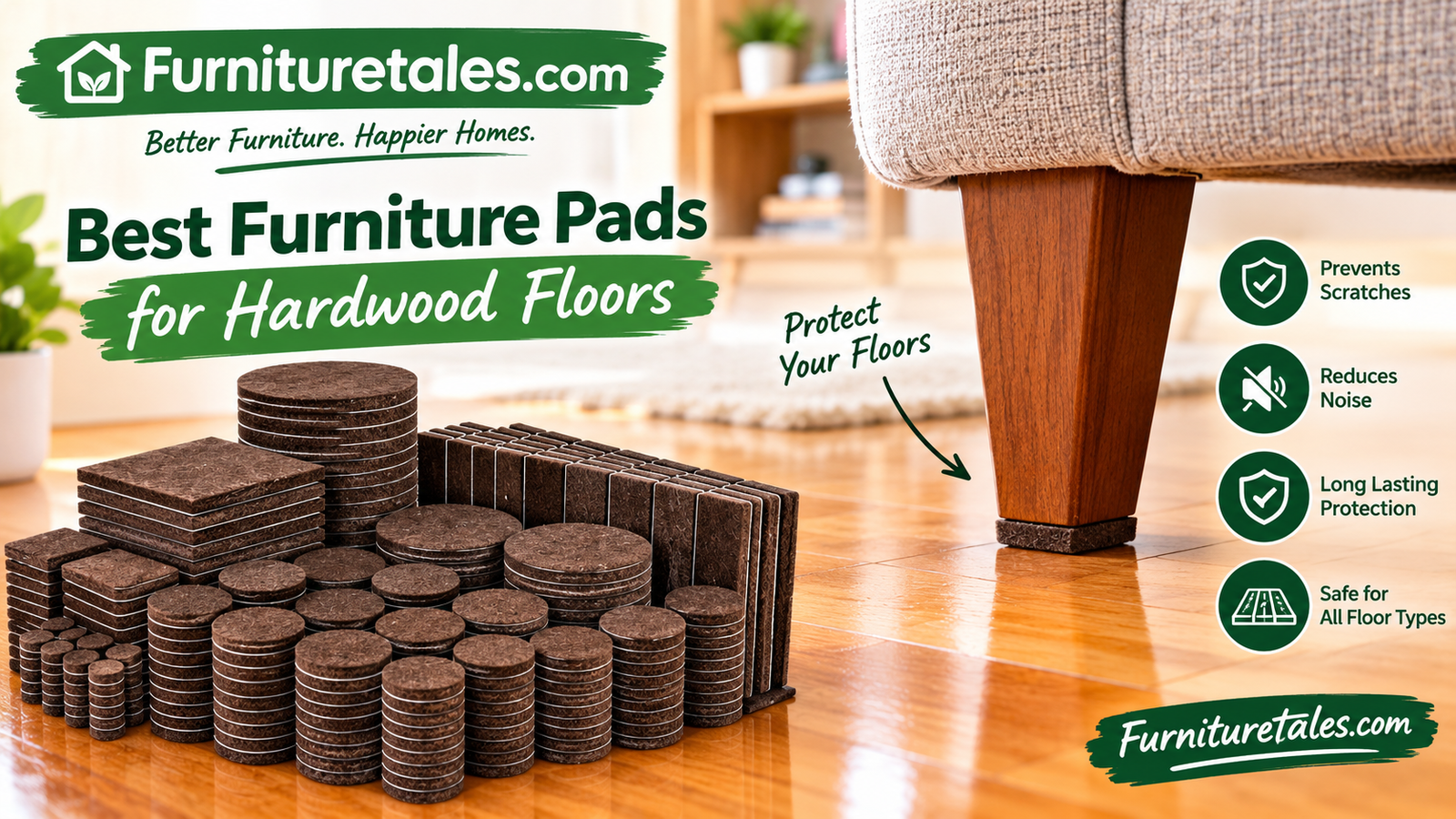
A good pad kit should cover every leg shape in the house — square, round, angled, and wide.
Hardwood floors are one of the best investments you can make in a home, and also one of the easiest to ruin without noticing. It rarely happens in a single dramatic moment. It happens quietly: a dining chair slides back a few thousand times, a sofa gets nudged during a movie night rearrangement, a bar stool spins on one spot until the finish clouds over. By the time you see the scratches from across the room, the damage is already part of the floor.
That is the entire reason furniture pads exist. A small disc of felt, rubber, or silicone between a chair leg and your floor is a boring purchase that pays for itself the first time someone forgets to lift a chair. But not all pads are equal, and the difference between a pad that lasts years and one that falls off within a week comes down to adhesive quality, felt density, backing material, and matching the pad type to the piece of furniture.
We put together this guide to cover the full landscape. You will find classic self-adhesive felt kits for everyday chairs and tables, heavy-duty molded pads for furniture that gets moved constantly, nail-on protectors for a permanent install, soft furniture socks for delicate floors and quiet rooms, rubber grippers and non-slip pads for pieces that creep across the floor, and leveling feet and caster cups for the awkward, heavy, or uneven stuff.
Before we get into individual reviews, here is the full line-up at a glance. Every product in this guide appears in the table below, so you can scan, compare, and jump straight to the deep dive that matters to you.
Short on time?
If you only read one thing: for most hardwood homes, a well-stocked self-adhesive felt kit with assorted shapes solves eighty percent of the problem. Add rubber grippers for furniture that slides when you do not want it to, and a set of cups or leveling feet for the heavy pieces that live in one spot.
Quick Comparison: Our Top Picks
Fourteen products, four categories, one goal: keeping your hardwood looking like it did the day it was installed. Scroll the table horizontally on smaller screens to see every column.
Swipe to see more →
| # | Image | Product | Key specs | Verdict | Price |
|---|---|---|---|---|---|
| 01 |  |
X-PROTECTOR Premium Felt Furniture Pads (133 pc)Best OverallTop Pick
|
Do-everything kit that handles chairs, tables, sofas, and decor in one box. | Check Price on Amazon | |
| 02 |  |
Scotch Felt Pads (162 pc)Best Variety Pack
|
Huge assortment from a household-name brand — great for outfitting an entire home at once. | Check Price on Amazon | |
| 03 |  |
Ansible Furniture PadsBest Value Assortment
|
A practical all-rounder for renters and first-time pad buyers who want one box to cover the basics. | Check Price on Amazon | |
| 04 |  |
Smart Surface 8850 Heavy Duty Pads (144 pc)Best Heavy-Duty
|
Built for furniture that gets dragged around daily — dining chairs, work stools, kid-zone seating. | Check Price on Amazon | |
| 05 |  |
SoftTouch Self-Stick Felt Furniture PadsBest for Everyday Furniture
|
Low-profile, easy to apply, and unobtrusive under lighter pieces like side chairs and plant stands. | Check Price on Amazon | |
| 06 |  |
Super Sliders Formed Felt PadsBest for Odd-Shaped Legs
|
The molded shape hugs curved and tapered legs where flat discs refuse to stay put. | Check Price on Amazon | |
| 07 |  |
ALIMITOPIA Nail-On Furniture PadsBest Permanent Fix
|
When you never want to think about pads again — nails beat adhesive for long-term installs. | Check Price on Amazon | |
| 08 |  |
NancyProtectz Chair Leg Protectors (furniture socks)Best Slip-On Option
|
Quiet, cozy, and renter-friendly — nothing sticks to your furniture and nothing scratches the floor. | Check Price on Amazon | |
| 09 |  |
CasterMaster Non-Slip Furniture PadsBest for Casters & Rolling Chairs
|
Stops wheeled chairs and rolling furniture from carving tracks across your finish. | Check Price on Amazon | |
| 10 |  |
Furnigear Non-Slip Rubber Pads (129 pc)Best Rubber Grip Set
|
For furniture that should stay exactly where you put it — and still leave the floor untouched. | Check Price on Amazon | |
| 11 |  |
HUAYY Adjustable Leveling Feet with Felt PadsBest for Uneven Furniture
|
Solves two problems at once: the wobble and the scratch risk underneath it. | Check Price on Amazon | |
| 12 |  |
Yopieke Silicone Furniture Cups (24 pack)Best for Planters & Appliances
|
Cups that grip the floor and cradle the leg — ideal for planters, stools, and appliance feet. | Check Price on Amazon | |
| 13 |  |
Semetall Rubber Caster CupsBest for Heavy Furniture
|
The set-and-forget option for sofas, hutches, and anything you never intend to move again. | Check Price on Amazon | |
| 14 |  |
Yelanon Rubber Grippers (16 pack)Best Non-Slip Grippers
|
Compact grippers that keep light furniture from wandering without raising it noticeably off the floor. | Check Price on Amazon |
Why Hardwood Floors Lose the Fight Against Furniture
It helps to understand exactly what is happening between a chair leg and a hardwood plank, because the answer is not simply “it scratches.” Wood floor finishes — whether polyurethane, hardwax oil, or a factory-applied aluminum oxide coating — are designed to take foot traffic, which is soft, distributed, and slow. Furniture legs concentrate an enormous amount of weight onto a contact patch the size of a coin. Add lateral movement, grit, and time, and you get three distinct kinds of damage.
1. Abrasion from grit and dust
The first enemy is not the furniture at all. It is the microscopic sand and grit that gets tracked in on shoes and settles on the floor. When a bare chair leg drags across that layer, the grit acts like sandpaper between the leg and the finish. This is why people are often confused to find scratches under furniture that “never moves.” It only has to move an inch at a time, a hundred times a week.
2. Point-load denting
Heavy furniture on small feet concentrates force. Sofas with narrow legs, bookcases loaded with shelves, and metal-capped chair feet can all press into softer wood species or older finishes over time. The dent may not be visible until the light hits the floor at a low angle, which is exactly when it becomes impossible to unsee.
3. Finish wear and clouding
Even without visible scratches, repeated friction wears through the top layer of finish. The result is a dull patch, a haze, or a ring that looks like a stain but is actually worn coating. This kind of damage usually shows up first around dining tables and desk chairs, precisely because those spots get the most repeat movement.
There is also the noise dimension, which matters more than people expect. Hard floors turn every chair movement into an event you can hear in the next room. Pads dampen that, and if you live above neighbors or simply value a quiet house, that benefit lands immediately. And if you are also trying to keep a home looking good overall, it is worth pairing pads with the habits in our guide to how to clean wood furniture, since clean furniture legs pick up and drag less grit in the first place.
The takeaway is simple: protection starts at the contact point. Everything else in this guide — materials, thickness, adhesive, mounting style — is about choosing the right protection for each specific piece of furniture.
What to Look for Before You Buy Furniture Pads
Walk down the hardware aisle or scroll any marketplace and you will find hundreds of pad sets that look nearly identical in photos. The differences that matter are rarely visible in a thumbnail. Here is how we evaluate pads, and how you can too.
Material: felt, rubber, silicone, or fabric
Felt is the classic choice for hardwood because it glides. It lets chairs move smoothly while keeping the leg off the finish, and dense felt resists compressing into flat spots over time. Rubber grips. It is the right call when furniture should not move at all — bar stools, floor lamps, side tables in high-traffic zones. Silicone sits between the two: soft, grippy, and often shaped into cups that cradle the leg. Fabric socks are the gentlest option of all, sliding over the leg like a sweater sleeve and leaving nothing adhesive behind.
Adhesive quality and surface prep
Self-adhesive pads live or die by the glue. A pad that peels off becomes a trap for dirt and eventually disappears under the sofa. Look for pads with a strong backing, and always apply them to a surface that is clean, dry, and free of old wax or polish residue. A quick wipe with isopropyl alcohol before sticking makes a startling difference in how long pads hold.
Thickness and felt density
Thicker felt absorbs more grit and lasts longer before it compresses, but it also raises the furniture slightly and can feel unstable on very light chairs. Dense, tightly matted felt outperforms fluffy, loosely bonded felt every time. If you can press the felt with a thumbnail and it squishes flat without rebounding, it will not survive a season of dining chairs.
Shape and size coverage
This is where assorted kits earn their keep. Round legs need round pads, square legs need square pads, and tapered or angled legs often need a smaller pad placed precisely at the contact point. If you are outfitting a whole home, a mixed kit is almost always smarter than four identical packs of one size. It is also worth measuring first — our guide on how to measure a room for furniture has the same principle: know your dimensions before you commit.
How the furniture actually moves
Dining chairs slide constantly, so they want smooth gliding felt. Sofas barely move, so grip matters more than glide. Rolling office chairs are their own category entirely, and wheels are notoriously brutal on wood finishes. And if you move heavy pieces often, dedicated furniture sliders for hardwood floors are a smarter tool than pads for that occasional big rearrangement.
A quick checklist before you click buy
- Count the legs you need to cover, then add spare pads for future replacements.
- Note which pieces move daily versus rarely.
- Check leg shapes: round, square, angled, metal-capped, or hollow tubing.
- Decide between glide (felt) and grip (rubber) for each room.
- Confirm the pad type suits your finish, especially with softer or oiled floors.
Best Self-Adhesive Felt Pad Kits
If you buy one category of floor protection, this is it. Self-adhesive felt kits cover the widest range of furniture with the least effort: peel, stick, press, done. The three below represent the strongest options for outfitting an entire home in a single purchase.
Swipe to see more →
| # | Product | Best for | At a glance | Price |
|---|---|---|---|---|
| 01 | X-PROTECTOR Premium Felt Furniture Pads (133 pc) | Best Overall | Large assorted kit, dense felt, strong self-adhesive backing | Check Price on Amazon |
| 02 | Scotch Felt Pads (162 pc) | Best Variety Pack | Widest shape and size mix, household brand familiarity | Check Price on Amazon |
| 03 | Ansible Furniture Pads | Best Value Assortment | Practical mixed kit that covers everyday furniture basics | Check Price on Amazon |
X-PROTECTOR Premium Felt Furniture Pads (133 pc)
The default recommendation for a reason: one box, most of the house covered.
There is a specific satisfaction in opening a pad kit and finding a shape for every leg you own. That is the X-PROTECTOR experience. The 133-piece set leans into variety, with an assortment sized for dining chairs, stools, sofa legs, coffee tables, and the random decorative pieces that scratch floors when you are not looking. The felt itself is the story here — dense enough to hold its shape under heavier furniture, and smooth enough to let dining chairs glide without the sticky-skip feeling you get from cheaper pads.
Key features
- Large 133-piece assortment that covers multiple rooms in one purchase
- Dense felt construction designed to resist flattening under daily chair movement
- Self-adhesive backing that grips clean, dry leg surfaces securely
- Range of shapes and diameters for round, square, and angled legs
- Low-profile finish that stays discreet under furniture
What we like
- Excellent shape variety for mixed furniture
- Felt holds up well under everyday sliding
- Big enough kit to leave spares for later
- Works on both finished and oiled wood
Keep in mind
- Adhesive still needs a clean surface to bond fully
- Very light chairs may feel slightly raised
- Round pads need trimming for tapered legs
Scotch Felt Pads (162 pc)
When you want a pad for absolutely everything, from bar stools to picture frames.
Scotch is one of those brand names that has become shorthand for the category, and the appeal here is straightforward: a very large assortment from a maker whose adhesive products you have probably trusted for years. With 162 pieces, this set is generous even by the standards of big kits. You get enough shape and size diversity to handle chair legs, table bases, small appliances, and decorative objects, with plenty left over for replacements down the road.
Key features
- Extra-large 162-piece assortment for whole-home coverage
- Broad mix of shapes and sizes for varied furniture legs
- Self-stick application with no tools or drying time
- Felt surface that cushions and glides on sealed hard floors
- Convenient for one-and-done outfitting projects
What we like
- One of the most complete assortments available
- Recognized brand with consistent adhesive quality
- Great value per pad when outfitting many pieces
- Extras make future maintenance easy
Keep in mind
- More pads than a small apartment needs
- Standard felt is best for moderate-use furniture
- Very heavy pieces may prefer a heavy-duty option
Ansible Furniture Pads
A practical starter set that handles the everyday essentials without overcomplicating things.
Not every home needs an industrial-scale kit. If you are renting, moving into a first place, or simply protecting a handful of key pieces, the Ansible set is a sensible middle ground. It arrives with a useful spread of self-adhesive felt shapes that handle the usual suspects — dining chairs, side tables, plant stands, and ottomans — and the application is exactly as complicated as it sounds: peel the backing, press onto a clean leg, and get on with your evening.
Key features
- Assorted shapes sized for common household furniture
- Self-adhesive backing for quick tool-free installation
- Felt contact surface that protects finishes from abrasion
- Compact kit that is easy to store and replace from
- Suitable for hardwood, laminate, and other sealed hard floors
What we like
- Straightforward kit for first-time pad buyers
- Good shape coverage for typical furniture
- Easy to apply in a single sitting
- Works well in apartments and smaller homes
Keep in mind
- Large homes may need more than one set
- Standard felt suits light to moderate use
- Fewer heavy-duty options than specialist kits
Best Heavy-Duty and Molded Felt Pads
Standard felt is fine for a side chair that gets pulled out twice a day. It is less convincing under a desk chair that rolls and slides for eight hours, or a dining set in a house with kids who treat chairs like scooters. That is where heavy-duty and formed felt comes in: thicker material, denser construction, and in some cases a molded shape that grips the leg instead of relying entirely on a flat adhesive disc.
Swipe to see more →
| # | Product | Best for | At a glance | Price |
|---|---|---|---|---|
| 01 | Smart Surface 8850 Heavy Duty Pads (144 pc) | Best Heavy-Duty | Dense heavy-duty felt, large assortment, self-adhesive | Check Price on Amazon |
| 02 | SoftTouch Self-Stick Felt Furniture Pads | Best for Everyday Furniture | Low-profile self-stick felt, subtle appearance | Check Price on Amazon |
| 03 | Super Sliders Formed Felt Pads | Best for Odd-Shaped Legs | Molded contour-fit felt for tapered and irregular legs | Check Price on Amazon |
Smart Surface 8850 Heavy Duty Pads (144 pc)
For furniture that works hard and floors that cannot afford to.
Some rooms are simply harder on floors than others. Kitchens, home offices, playrooms, and dining areas see constant furniture movement, and standard thin pads can wear through faster than you expect. The Smart Surface 8850 line is built for exactly this scenario. The 144-piece set pairs a serious quantity of pads with a heavier-duty felt that is designed to take repeated sliding without immediately compressing or fraying at the edges.
Key features
- 144-piece heavy-duty set sized for high-traffic furniture
- Dense felt construction that withstands frequent chair movement
- Self-adhesive backing for straightforward application
- Assorted sizes covering chairs, tables, and larger legs
- Designed for demanding everyday use rather than occasional contact
What we like
- Handles daily abuse from dining and desk chairs
- Generous count for whole-room coverage
- Felt density feels durable under heavier pieces
- Good replacement supply included
Keep in mind
- Heavier felt adds a touch more height
- Overkill for rarely moved decor
- Adhesive bonding still depends on clean legs
SoftTouch Self-Stick Felt Furniture Pads
Quiet, low-profile protection that disappears under the furniture it protects.
Not every pad needs to be a tank. Most of the furniture in an average home — side chairs, accent tables, plant stands, small cabinets — moves occasionally and needs gentle, reliable protection more than industrial strength. SoftTouch nails that brief. These self-stick felt pads are low-profile and unobtrusive, which matters more than you might think on lighter furniture where a chunky pad can make the piece feel slightly off-balance.
Key features
- Self-stick application with a clean peel-and-press install
- Low-profile felt that stays discreet under legs
- Assorted shapes for common household furniture
- Soft contact surface that cushions and glides
- Suitable for everyday light to moderate-use pieces
What we like
- Practically invisible once applied
- Great for lighter furniture and decor
- Fast, forgiving installation
- Soft feel under delicate finishes
Keep in mind
- Not intended for heavy daily-sliding furniture
- Thinner profile means earlier replacement
- Best paired with a heavy-duty set for dining chairs
Super Sliders Formed Felt Pads
When flat discs refuse to stay on curved, tapered, or angled legs.
Here is a problem every furniture lover eventually meets: mid-century legs that taper to nothing, turned wooden legs with curves, angled splayed legs on retro chairs. Flat round pads either overhang into empty air or sit on too small a contact patch, and they pop off within days. Formed felt solves this by molding the pad into a shape that follows the leg, increasing the contact area and giving the adhesive somewhere real to grip.
Key features
- Molded felt profile that conforms to irregular leg shapes
- Contour fit that improves adhesive contact on tapered legs
- Self-adhesive backing for direct application
- Smooth felt face for gliding on sealed wood floors
- Designed for furniture where standard discs fail
What we like
- Actually stays on curved and angled legs
- Wider contact area means less wear per pad
- Ideal for vintage and designer furniture
- Eliminates the trimming puzzle of flat pads
Keep in mind
- Less versatile on perfectly flat leg bottoms
- Fit depends on leg shape matching the mold
- You may need more than one style for mixed sets
Best Nail-On Furniture Pads for a Permanent Install
Adhesive is convenient, but it has an enemy: time. Heat cycles, cleaning products, damp mopping, and sheer mechanical stress all conspire to dry out self-stick glue eventually. For furniture you intend to keep for decades — solid wood dining tables, heirloom chairs, workshop stools — a mechanically fastened pad removes the question entirely. Nail-on pads anchor into the wood itself, which means the felt can be replaced while the base stays put.
ALIMITOPIA Nail-On Furniture Pads
Set it once, and stop thinking about floor protection for years.
There is a category of furniture where adhesive is simply the wrong answer. Heavy solid-wood chairs, workbenches, antique pieces, anything in a garage or studio — these items get dragged, loaded, and abused in ways that defeat even good self-stick pads. The ALIMITOPIA nail-on pads take the mechanical route, fixing a felt-faced protector to the leg with a nail so the pad moves as one with the furniture rather than relying on glue chemistry.
Key features
- Nail-on mounting for a secure, permanent attachment
- Felt contact face that shields the floor during movement
- Ideal for solid wood legs where nails can anchor properly
- No adhesive to dry out, peel, or collect grit
- Low-maintenance install for long-term furniture
What we like
- Wont peel off the way adhesive pads eventually do
- Excellent for heavy, frequently moved furniture
- Clean look with no curling pad edges
- Truly a once-and-done project
Keep in mind
- Requires drilling or hammering into the leg
- Not suitable for hollow metal or plastic legs
- Not ideal for antiques you do not want to alter
Installation tip
If you go the nail-on route, start the nail carefully and keep it centered in the leg. A pilot hole makes life easier on hardwoods, and a few gentle taps beat one mighty swing. Once anchored, the pad becomes part of the chair — and your floor gets a protector that does not quit.
Best Furniture Socks and Slip-On Leg Covers
Adhesive pads have one weakness that has nothing to do with glue: the residue question. If you rent, if you own furniture you may sell someday, or if you simply do not like the idea of anything permanently attached to your chair legs, slip-on covers are a beautifully simple answer. They stretch over the leg like a sock, grip through tension, and come off as easily as they went on.
NancyProtectz Chair Leg Protectors (furniture socks)
Soft, silent, and completely commitment-free.
Furniture socks solve several problems at once. They protect the floor with a soft knit contact surface. They muffle the scrape of chairs to near silence. They leave zero residue on the furniture itself. And when a cover wears out or gets grubby, you pull it off and replace it — no scraping, no glue remover, no fuss. The NancyProtectz covers are made for exactly this kind of low-drama protection, stretching over chair legs and staying in place through the natural tension of the fabric.
Key features
- Stretch fabric construction that slips over chair legs
- No adhesive, nails, or hardware required
- Soft knit contact that protects finishes and dampens noise
- Reusable and washable for long service life
- Quick to install, remove, and swap between sets
What we like
- Zero residue on furniture or floors
- Extremely quiet during chair movement
- Perfect for rentals and shared spaces
- Easy to clean and reuse
Keep in mind
- Fit varies with leg thickness
- Knit can stretch over long periods
- Less glide than felt for sliding chairs
Best Non-Slip and Rubber Grip Pads
Sometimes the goal is the exact opposite of gliding. A bar stool that scoots away as you sit. A floor lamp that wanders toward the wall. A side table that creeps every time someone bumps it. Rubber and non-slip gripper pads exist to end that movement, using grip rather than slide to hold furniture exactly where you placed it — all while cushioning the floor from hard legs.
Swipe to see more →
| # | Product | Best for | At a glance | Price |
|---|---|---|---|---|
| 01 | CasterMaster Non-Slip Furniture Pads | Best for Casters & Rolling Chairs | Non-slip design for wheeled furniture on hard floors | Check Price on Amazon |
| 02 | Furnigear Non-Slip Rubber Pads (129 pc) | Best Rubber Grip Set | Large rubber assortment for grip plus protection | Check Price on Amazon |
| 03 | Yelanon Rubber Grippers (16 pack) | Best Non-Slip Grippers | Compact grippers for light furniture that tends to wander | Check Price on Amazon |
CasterMaster Non-Slip Furniture Pads
Because rolling chairs and hardwood finishes are natural enemies.
Caster wheels are relentless. They concentrate enormous pressure onto tiny contact points, they rotate, and they trap grit that then grinds into the finish as they roll. If you have a rolling office chair or any wheeled furniture on wood, this is one of the highest-risk items in the house. CasterMaster pads are designed for that specific problem, gripping the floor and containing casters so rolling furniture stops being a slow-motion sanding machine.
Key features
- Non-slip construction designed around casters and rolling furniture
- Grip that holds wheeled pieces in place on hard floors
- Protective barrier between wheels and finished wood
- Helps contain grit that collects under rolling furniture
- Practical solution for office chairs and mobile pieces
What we like
- Targets the worst offender for floor wear
- Stops unwanted rolling and drifting
- Protects against grit grinding under wheels
- Simple upgrade over bare casters
Keep in mind
- Purpose-built, not a general pad kit
- Rolling movement becomes limited by design
- Best combined with felt pads elsewhere in the room
Furnigear Non-Slip Rubber Pads (129 pc)
Grip-first protection for furniture that should never wander.
Rubber is the material of choice when stability is the priority. Where felt encourages motion, rubber resists it, and that makes a rubber pad set the right tool for bar stools, entryway benches, floor lamps, and any piece that lives in a traffic path. The Furnigear set brings that grip in quantity, with an assortment that covers a household of mixed furniture rather than forcing you to buy three separate packs.
Key features
- 129-piece rubber set with assorted shapes for mixed furniture
- Non-slip grip that holds furniture in position
- Rubber cushioning that protects finishes from point pressure
- Self-adhesive style application for quick outfitting
- Well suited to high-traffic areas and hard floors
What we like
- Excellent stability on smooth wood finishes
- Large assortment for whole-home coverage
- Durable material under heavier pieces
- Reduces noise from shifting furniture
Keep in mind
- Grip means less sliding for chairs you move often
- Felt is better for dining chairs that glide
- Some users prefer rubber only on stationary pieces
Yelanon Rubber Grippers (16 pack)
Small, simple, and surprisingly effective at ending furniture drift.
Not every job needs a mega-kit. Sometimes you have one offending chair, one lamp that will not stay put, or one bench that squeaks its way across the entryway every week. The Yelanon grippers are built for exactly that kind of targeted problem: compact rubber grippers that add a high-friction contact point under a leg without dramatically changing the look or height of the piece.
Key features
- 16-pack sized for targeted jobs and smaller furniture sets
- Rubber gripper construction with strong floor friction
- Anti-slip profile that prevents creeping and walking
- Suitable for a range of hard floor surfaces
- Low-profile design that stays unobtrusive
What we like
- Quick fix for specific problem pieces
- Strong grip without bulky hardware
- Good for light to moderate furniture
- Easy to test on one piece before committing
Keep in mind
- Count suits small projects, not whole homes
- Not a glide solution for dining chairs
- Heavier furniture may want a full rubber cup
Best Leveling Feet, Cups, and Cradles for Heavy Pieces
Some furniture presents a problem that no flat pad can fully solve. A heavy hutch that wobbles on an uneven floor. A washing machine in a wood-floored utility room. A planter that sits damp and gritty. A sofa whose legs sink into the same four spots year after year. For these cases, cups, cradles, and leveling feet distribute the load across a wider footprint and give the floor a soft, stable interface.
Swipe to see more →
| # | Product | Best for | At a glance | Price |
|---|---|---|---|---|
| 01 | HUAYY Adjustable Leveling Feet with Felt Pads | Best for Uneven Furniture | Adjustable height with integrated felt floor contact | Check Price on Amazon |
| 02 | Yopieke Silicone Furniture Cups (24 pack) | Best for Planters & Appliances | Silicone cups that cradle legs and grip the floor | Check Price on Amazon |
| 03 | Semetall Rubber Caster Cups | Best for Heavy Furniture | Cupped rubber design for stationary heavy pieces | Check Price on Amazon |
HUAYY Adjustable Leveling Feet with Felt Pads
Because a wobbly chair is both annoying and a floor-scratch generator.
Uneven floors and slightly warped furniture create a problem that pure pads cannot fix. When a chair rocks, the short leg lifts and the long legs take extra pressure and extra movement — which means more scratching exactly where you least want it. Adjustable leveling feet address the root cause by letting you fine-tune each leg until the piece sits dead level, and when those feet come with felt pads integrated, you get floor protection built into the fix.
Key features
- Adjustable height for fine-tuning on uneven surfaces
- Integrated felt pad protecting the floor at the contact point
- Stabilizes wobbly tables, chairs, and stands
- Distributes load more evenly across legs
- Practical for both older furniture and uneven flooring
What we like
- Fixes wobble and scratch risk simultaneously
- Great for older homes with settled floors
- Level furniture simply feels better to use
- Felt contact keeps finishes safe
Keep in mind
- Requires fitting rather than simple peel-and-stick
- Best on furniture with compatible leg openings
- Overkill for perfectly level pieces
Yopieke Silicone Furniture Cups (24 pack)
A cradle for legs that are awkward, damp, or heavy.
Cups work on a different principle than pads. Instead of sticking to the leg, they sit on the floor and let the leg rest inside them, which means they handle legs that are too wide, too irregular, or too gritty for adhesive to bond with. The Yopieke silicone cups are a natural fit for planters, stools, appliance feet, and any furniture where moisture or dirt would compromise a self-stick pad. The 24-pack quantity also makes them easy to spread across multiple rooms.
Key features
- 24-pack for outfitting multiple pieces and rooms
- Silicone construction that is soft, grippy, and resilient
- Cup design that cradles the leg instead of sticking to it
- Non-slip contact with the floor surface
- Useful for planters, appliances, stools, and irregular legs
What we like
- No adhesive to fail on damp or dirty legs
- Excellent for heavy planters and appliances
- Reusable and easy to reposition
- Generous count for the price of one project
Keep in mind
- Raises furniture slightly more than flat pads
- Cup size must suit the leg diameter
- Less suited to chairs you slide at every meal
Semetall Rubber Caster Cups
Set-and-forget support for the heaviest things you own.
Heavy furniture does not need to move to damage a floor. It just needs to sit there, pressing its legs into the finish season after season while cleaning moisture and grit collect underneath. Rubber caster cups change the contact entirely: the leg rests in a cupped rubber base that spreads the load, grips the floor, and keeps debris from grinding between the leg and the wood. It is the most boring solution in this guide and one of the most effective.
Key features
- Heavy rubber caster cups with a cupped retention design
- Wide footprint that distributes concentrated leg pressure
- Grippy base that keeps stationary furniture in place
- Floor-friendly contact surface for finished wood
- Long service life under heavy, unmoving pieces
What we like
- Ideal for hutches, sofas, and heavy cabinets
- Spreads load to reduce denting
- No adhesive, no nails, no residue
- Extremely stable once positioned
Keep in mind
- Not designed for frequently moved furniture
- Leg must fit within the cup
- Visible under open-frame furniture
Felt vs Rubber vs Silicone vs Furniture Socks: Which Material Wins?
Ask ten people which furniture pad is best and you will get ten answers, because the right material depends entirely on the job. Rather than crown a universal winner, it is more useful to match material to behavior. Here is how the four main categories compare in practice.
Swipe to see more →
| Material | Glide | Grip | Best use case | Watch out for |
|---|---|---|---|---|
| Felt | Excellent | Low | Dining chairs, anything that slides regularly | Compresses over time under heavy loads |
| Rubber | Poor | Excellent | Bar stools, lamps, tables that should stay put | Not ideal for chairs you move at every meal |
| Silicone | Moderate | Very good | Cups for planters, appliances, wide legs | Adds more height than flat pads |
| Fabric socks | Good | Moderate | Quiet rooms, rentals, delicate legs | Fit and tension vary with leg thickness |
When felt is the clear winner
Any furniture that moves in normal life wants felt. Dining chairs are the obvious case, but so are desk chairs without casters, stools, and ottomans that get pushed around. Felt lets movement happen naturally instead of fighting it, which reduces the temptation to lift or drag furniture awkwardly. The trade-off is that felt wears gradually, so treat it as a consumable: inspect it, and replace pads before they thin out completely.
When rubber beats everything else
Rubber wins when stillness is the goal. On smooth hardwood, a good rubber pad can feel almost glued in place without any adhesive at all. That makes it perfect for floor lamps that get bumped, bar stools that scoot, and console tables in hallways where people brush past constantly. The one mistake people make is putting rubber under dining chairs, then wondering why moving chairs feels heavy and awkward.
When to reach for cups and socks
Silicone and rubber cups solve geometry problems — wide legs, uneven bottoms, planters with moisture, appliance feet that would crush a flat pad. Furniture socks solve surface problems: delicate finishes, adhesives you cannot risk, and noise. Many well-protected homes end up using a mix, which is exactly what the big assorted kits are designed to support.
Rule of thumb
Glide with felt, grip with rubber, cradle with cups, and go soft and reversible with socks. Once you sort each room by how its furniture actually moves, the material choice usually makes itself.
How to Apply Furniture Pads So They Actually Stay
You can buy the best pads on the market and still end up chasing them across the floor if the application is sloppy. The good news is that professional-quality results come down to a handful of habits, none of which require special tools or much time.
Step one: clean both surfaces properly
Dust, old polish, wax residue, and cleaning spray film are the top reasons pads fail early. Wipe the leg bottom and the surrounding floor area with a clean cloth, then give the leg a quick pass with isopropyl alcohol to strip anything invisible. Let it dry completely. This single step doubles the effective life of a self-adhesive pad.
Step two: match the pad to the contact area
The pad should cover as much of the flat leg bottom as possible without overhanging. An overhanging pad collects grit around the edges and peels; an undersized pad concentrates pressure and wears through fast. If you are between sizes, go slightly smaller and center it carefully.
Step three: press with real pressure
Peel, place, then press firmly for a sustained count rather than a quick tap. Body weight helps on chair legs — flip the chair, sit it on its side, and press with your palm or a flat block. Pressure-sensitive adhesives bond with force, not just contact, and this is where most people cut corners.
Step four: give the bond time before abuse
Adhesives reach full strength after a settling period. If possible, apply pads in the evening and let furniture sit overnight before sliding it around. It is a small delay that pays off in months of extra pad life.
Step five: inspect on a rhythm
Every few months, run your eyes along the contact points of high-use furniture. Thin spots, curling edges, and darkened felt all signal replacement time. Swapping a pad takes seconds; refinishing a scratched floor takes days. If grit has already marked the surface, our guide on how to remove scratches from wood furniture covers the repair side of the equation.
Common application mistakes
- Sticking pads onto dusty or freshly polished legs.
- Using one pad size for every leg in the house.
- Pressing too lightly and assuming the glue will figure it out.
- Leaving pads on until the felt wears through to the adhesive layer.
- Ignoring metal or plastic leg caps that need a different pad style.
Maintenance and Floor Care After the Pads Go On
Pads are protective gear, not a magic force field. Floors still need regular care, and the areas under furniture deserve attention too — out of sight is exactly where grit accumulates and old damage hides. Here is how to keep everything in good shape once your protection is in place.
Vacuum under and around furniture regularly
Grit collects most densely where cleaning rarely reaches: under beds, behind sofas, beneath dining tables. Pull furniture back occasionally and vacuum those zones properly. If deep cleaning is on your list, a furniture cleaner machine can help with upholstery and hard-to-reach areas around heavy pieces.
Keep the finish healthy
A well-maintained finish resists wear better than a neglected one. Regular dusting with the right product makes a real difference, and our roundups of the best furniture polish and the best furniture wax for wood walk through which products suit which finishes. Just be careful that polish residue does not migrate onto pads or legs, where it can weaken adhesion.
Deal with damage early
Water glasses leave rings, moving boxes leave scuffs, and life leaves marks. The sooner you address them, the simpler the fix. We have full walkthroughs for removing water rings from wood furniture and for handling deeper marks — and if a gouge or chip is beyond cleaning, wood filler for furniture repair can restore the surface before it spreads or splinters.
Replace pads on a schedule, not on failure
The most common maintenance error is waiting until a pad is completely gone before replacing it. By then the floor has been taking direct contact, sometimes for weeks. High-use chairs deserve a pad check every season; heavy stationary pieces need attention less often but should still be inspected.
A simple seasonal routine
- Slide dining chairs out and inspect all contact pads.
- Vacuum underneath sofas, beds, and heavy cabinets.
- Wipe leg bottoms before applying any replacement pads.
- Check cups and leveling feet for grit trapped underneath.
- Refresh the floor finish according to its manufacturer guidelines.
Matching the Pad to the Furniture and the Room
The final piece of the puzzle is context. A pad that works beautifully in a dining room can be the wrong choice in a home office, and the right protection for a sofa is not the right protection for a planter. Let us walk room by room and piece by piece.
Dining chairs and kitchen seating
These move constantly and in the same direction: out, in, out, in. Smooth gliding felt is the answer, ideally in a heavier-duty density. This is also the room where pads wear fastest, so buy enough spares. If your dining set sits in a high-traffic layout, our guide to how to arrange living room furniture has broader layout thinking that applies to dining zones too.
Sofas, sectionals, and heavy seating
Big furniture moves rarely but carries serious weight. Grip matters more than glide here, and wide-footprint cups or dense pads prevent pressure denting. If your sofa lives near windows, it is also worth reading how to protect furniture from sun damage, since fading and floor wear often go together in bright rooms.
Home office chairs and rolling furniture
Casters are the number one hardwood villain in most homes. Use dedicated caster protection or a chair mat rated for hard floors, and combine with non-slip pads on the desk and shelving around it. Our comparison of furniture sliders for hardwood floors is also useful if you reconfigure the room often.
Planters, appliances, and utility pieces
Moisture and grit make adhesive pads a poor fit here. Cups — silicone or rubber — keep the leg off the floor entirely and are easy to lift for cleaning. This is also the category where outdoor-adjacent items appear, and if your furniture lives on a covered patio with hardwood or composite decking nearby, see our picks for outdoor patio furniture covers.
Homes with pets
Pets add two variables: hair and enthusiasm. Hair collects under furniture and traps grit against the floor, and excited animals can shove chairs and tables around. Grip pads and furniture socks both help keep pieces steady. For the cleaning side, our guide on how to get pet hair off furniture keeps the hair problem contained, and if your cat has decided the sofa is a scratching post, how to stop cats from scratching furniture covers the behavioral side.
Secondhand and stored furniture
Before outfitting a used piece, inspect and clean the legs thoroughly — old adhesive, wax, and grime all compromise new pads. If a piece arrives with lingering odors, handle that first with our guide on how to get smell out of used furniture. Freshly restored or repainted pieces deserve protection from day one, and if a restoration is on your horizon, our guides to the best paint for furniture, how to paint furniture, and how to paint IKEA furniture cover the full workflow.
Room-by-room quick reference
- Dining: heavy-duty felt, spare pads, seasonal checks.
- Living room: cups or grip pads under heavy seating, socks on delicate legs.
- Office: caster protection first, non-slip pads for surrounding furniture.
- Kitchen: rubber grip for stools, felt for anything moved during cooking.
- Utility areas: silicone or rubber cups for appliances and planters.
Frequently Asked Questions
Do furniture pads actually work on hardwood floors?
Yes — when they are matched to the furniture and applied correctly. A pad works by becoming the surface that touches the floor instead of the leg, absorbing friction and distributing pressure. The failure cases almost always come down to the wrong material for the job, poor surface prep, or leaving the pad on long after it has worn out.
Which is better for hardwood: felt or rubber pads?
Neither is universally better; they do opposite jobs. Felt lets furniture glide, which makes it ideal for dining chairs and anything moved frequently. Rubber grips, which makes it ideal for furniture that should stay put, like bar stools and floor lamps. Most homes use both in different rooms.
How do I keep furniture pads from falling off?
Three things matter most: a truly clean leg bottom, firm pressure during application, and the right pad size for the contact area. Wipe legs with isopropyl alcohol before sticking, press hard rather than lightly, and avoid pads that overhang the leg edge. For problem legs, formed pads or nail-on options are far more reliable than flat adhesive discs.
How often should furniture pads be replaced?
There is no fixed schedule because wear depends on use. Dining chairs may need new pads every few months in busy households, while pads under a stationary cabinet can last far longer. The practical approach is visual: replace when the felt thins, darkens, curls at the edges, or exposes adhesive.
Can I use furniture pads on engineered hardwood or laminate?
Yes. The same principles apply to any sealed hard floor surface. The key is to avoid anything abrasive and to keep grit from being trapped between the pad and the floor. Soft felt, rubber, and silicone are all generally appropriate, though you should always confirm compatibility with your flooring manufacturer if the floor has a specialty finish.
Are furniture socks better than adhesive pads?
They are better in specific situations: rental properties, delicate or irregular legs, households where noise matters, and anywhere you want completely reversible protection. Adhesive pads generally offer a more secure, lower-profile fit for everyday furniture, so many people use each type where it suits best.
Do nail-on pads damage furniture?
They require modifying the leg with a small nail or screw, which is permanent. On solid wood furniture intended for long-term use, this is usually a worthwhile trade for the most secure attachment available. On antiques, veneer, or hollow legs, adhesive or slip-on options are the safer route.
What pads should I use under heavy furniture?
Wide-footprint options win here: caster cups, leveling feet, or dense heavy-duty pads. The goal is to spread concentrated weight across a larger contact area so the leg does not press into the finish over time. Rubber cups are particularly effective for pieces that never move.
Can furniture pads stop chairs from scratching floors completely?
They eliminate the direct contact that causes the vast majority of scratches, which is as close to complete protection as practical. The remaining risk is trapped grit, so regular cleaning around and under furniture remains important even with pads installed.
Should I pad every piece of furniture in the house?
Start with anything that moves regularly and anything heavy. Dining chairs, desk chairs, bar stools, sofas, and large cabinets give you most of the benefit. Decorative pieces that never move are lower priority, though pads still help if you clean behind them often.
Why do my pads leave marks or residue on the floor?
Usually the pad has worn through or collected abrasive grit on its surface, turning the protector itself into the problem. Replace worn pads promptly, and clean both the floor and the pad contact area regularly so debris cannot build up underneath.
Do I need different pads for chairs with wheels?
Yes. Casters concentrate pressure and trap grit in ways standard pads are not designed to handle. Use dedicated caster protection or a hard-floor chair mat, and treat wheeled furniture as its own category when planning your protection.
Final Word: Protect the Floor Now, Refinish Never
Hardwood floor repair is one of those projects that starts small and ends with a quote that makes you sit down. Furniture pads are the opposite: a modest purchase, a few minutes of work, and years of quiet protection. The best pad is not the most expensive one — it is the one that matches how your furniture actually behaves.
For most homes, a comprehensive self-adhesive felt kit like the X-PROTECTOR or Scotch assortment covers the bulk of the problem in one afternoon. Add heavy-duty or formed felt where chairs work hard, rubber grip where furniture should stay put, and cups or leveling feet for the heavy and awkward pieces. From there, it is simply a matter of inspecting pads on a rhythm and cleaning the zones nobody thinks about.
Your floors took years to choose and install. Give them an afternoon of protection.
Check Price on Amazon