
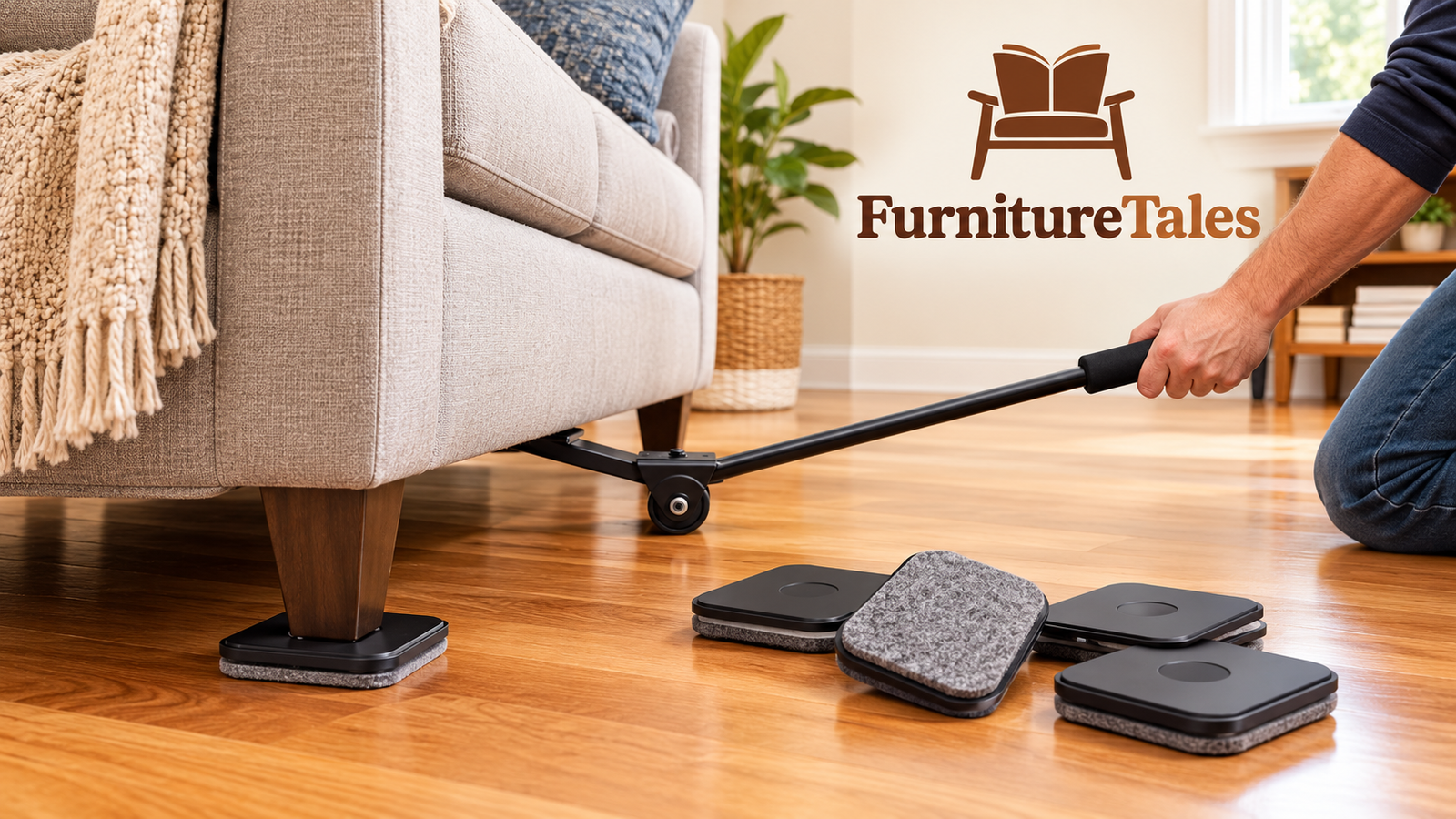
Best Furniture Sliders for Hardwood Floors: 9 Tested Picks That Protect Your Floors
Moving a sofa, a dresser, or a loaded bookcase across hardwood should not cost you a weekend of regret. The right sliders turn a floor-scarring shove into a smooth, quiet glide. Here is how to choose them, and which ones are worth your money.

Hardwood floors are one of those features that make a home feel finished. They are warm, they photograph beautifully, and they add real value. They are also surprisingly easy to ruin. One afternoon of rearranging, one heavy armchair dragged six feet, and you are staring at a pale, curved scratch that catches the light every morning for years.
The fix is almost embarrassingly cheap. A set of furniture sliders costs less than a takeout dinner, and it turns a risky, back-straining shove into something close to effortless. The catch is that “furniture slider” covers a wide range of products. Some are soft felt pads designed to protect finished wood. Some are hard plastic discs meant for carpet. Some are reusable, some are single-use, and some are built for the kind of heavy lifting that has nothing to do with a lightweight side table.
That is why this guide exists. We looked closely at nine popular options, from compact felt sets to extra-large sliders for oversized pieces and a full moving kit. For each one, we cover what it is good at, where it falls short, and who should actually buy it. If you are also planning the move itself, our guides on how to measure a room for furniture and how to arrange living room furniture pair nicely with what follows.
The short version: for hardwood, choose sliders with a soft felt or smooth, non-abrasive surface on the floor side. Match the slider size to the furniture base. Use heavier-duty options for appliances and large cabinets. And always clear grit from the floor before you move anything.
Top Picks at a Glance
| Product | Best For | Format | Standout Trait |
|---|---|---|---|
| X-Protector Felt Sliders (16 Pcs, 3.5″) | Chair and table legs, whole-room moves | Self-stick felt pads, multi-pack | Plenty of pieces for the price |
| X-Protector Felt Sliders (4 Pcs, 6″ x 3.5″) | Wider feet and bases | Larger rectangular felt pads | More surface area per slider |
| Super Sliders 5″ Round | Round or chunky furniture feet | Reusable felt, slide and hide | Can be left on and hidden |
| Super Sliders Oval (3.5″ x 6″) | Medium-weight furniture with wide feet | Reusable oval sliders | Oval shape fits long, narrow feet |
| Super Sliders Assorted Value Pack | Mixed furniture across a home | Multiple sizes and shapes | One purchase covers many pieces |
| Super Sliders XL (9.5″ x 5.75″) | Large, heavy bases | Extra-large reusable sliders | Big footprint spreads weight |
| EZ Moves Furniture Sliders | Heavy furniture | Heavy-duty sliders | Built with weight in mind |
| FLERISE Moving Kit | Hard floors, full moves | Moving kit | Multiple tools in one box |
| Skylarlife 16-Piece Set | General household use | 16-piece slider set | Good quantity for varied furniture |
Before you scroll to the products, spend a minute on the next two sections. Understanding how floors get damaged and what to look for will save you from buying a perfectly good slider that is wrong for your furniture.
1. Why Hardwood Floors Need Sliders in the First Place
Hardwood looks tough, and in some ways it is. It handles decades of foot traffic. But the finish on top, whether it is polyurethane, wax, oil, or a hard-wax oil, is only a thin protective film. Break through that film and you expose the wood itself, which absorbs moisture, shows scratches, and darkens over time.
The three ways furniture damages wood
Dragging. This is the obvious one. When you push a piece across the floor, its legs act like plows. Any hard contact point concentrates the entire weight of the furniture onto a tiny area. A 150-pound dresser pressing on four small points creates far more pressure per square inch than a person walking in heels. Drag it and you leave long, straight scratches, and sometimes gouges.
Trapped grit. Even if the furniture itself is smooth, the floor beneath it is rarely perfectly clean. Sand, dust, and tiny stone fragments ride in on shoes and settle in corners. Slide a chair over them and each particle becomes a tiny chisel. This is why scratches often appear in patterns that do not match the furniture legs at all.
Rough or unfinished feet. Wooden legs with exposed edges, metal feet with burrs, and plastic caps that have hardened with age can all scuff a finish. Many bed frames, bookcases, and appliances ship with rigid feet that were never designed with wood in mind.
Why the damage is hard to reverse
Light surface scuffs can sometimes be buffed out or hidden with a good polish. We cover that in our roundup of the best furniture polish and our walkthrough on how to clean wood furniture, though those focus on furniture surfaces rather than floors. Deep scratches, though, usually mean sanding and refinishing a section or even a whole room. That is a costly job compared with a pack of felt pads.
Prevention wins on every measure: cost, time, and stress. A slider reduces friction so you push with less force. It spreads weight across a larger area so you do not leave dents. And it keeps the hard parts of your furniture from ever touching the finish.
Moving day versus everyday protection
There are really two jobs here. The first is temporary: you are rearranging, cleaning behind furniture, or relocating. For that you want sliders you can place under a piece, move it, and remove. The second is permanent: you want pads that stay on the feet of chairs and tables to stop scratches from daily use. Some products handle one job well, some handle both, and a few are honest about being good at only one. Knowing which job you need to do is the first step in choosing correctly.
A kitchen with chairs scraped in and out a dozen times a day needs permanent felt. A living room you rearrange twice a year needs reusable movers. A full house move needs a kit. Most households end up wanting a mix.
Small habits that multiply the benefit
Sliders work best as part of a routine. Keep a small basket near the closet with a microfiber cloth, a few spare felt pads, and a couple of reusable movers. When you decide to shift something, you will have everything within reach, and you will be far less tempted to take a shortcut and drag the piece.
Walk your floors every few months and look for the telltale signs of trouble: dull streaks where chairs are pulled out, small crescent-shaped dents under heavy legs, or a faint haze near the edges of area rugs. Spotting these early lets you swap a worn pad or add a larger slider before the damage becomes permanent. It is also a good moment to vacuum under the furniture, since that is where grit collects most.
Finally, think about the people in your household. Kids, guests, and movers are far more likely to drag a chair than you are. Placing felt pads on the pieces that others use most, such as dining chairs, stools, and desk chairs, protects your floors even when you are not the one doing the pushing. A few dollars in pads can save you from an expensive refinishing job later.
Pro tip: before you slide anything, run your hand along the floor and the furniture feet. If you feel grit, wipe it away. Ten seconds of checking prevents the most common source of scratches.
Ready to protect your floors? Browse popular furniture sliders made for hardwood.
Shop Furniture Sliders on Amazon2. What to Look for Before You Buy Furniture Sliders
Walk down the furniture-moving aisle, or scroll through an online listing page, and every package promises the same thing: protects floors, makes moving easy. The details underneath those claims are what separate a good purchase from a frustrating one.
Floor-side material
This is the single most important factor for hardwood. The surface that touches your floor should be soft, smooth, and free of anything abrasive. Felt is the classic choice. It is gentle, quiet, and slightly cushioned. Many reusable sliders use a felt or fabric layer on the bottom for exactly this reason. Smooth plastic or composite surfaces also work well when they are designed for hard floors, though they can pick up grit and should be checked often.
Be cautious with hard, textured rubber or anything with a rough underside. Those designs are usually intended to grip carpet, not glide on wood.
Furniture-side attachment
The top of the slider needs to hold the furniture without shifting. There are three common approaches:
- Adhesive backing: a self-stick layer that attaches to the furniture foot. Good for permanent pads and for sliders you want to leave in place.
- Grip surface: a textured top that holds the foot by friction and weight. Common on reusable movers.
- Cup or tray design: a raised edge that cradles the foot so it cannot slide off. Handy for round feet and for pieces you will move a long way.
Size and shape
A slider should be at least as large as the furniture foot, and ideally a little larger. A narrow chair leg on a big slider is stable. A wide cabinet foot on a tiny slider tips and slips. Match round sliders to round feet, and rectangular or oval sliders to wide, flat bases. That is why several products on our list come in multiple sizes and shapes: no single size fits everything in a house.
Weight capacity and furniture type
Lightweight chairs, plant stands, and side tables ask very little of a slider. A fully loaded dresser, a filled bookcase, or a refrigerator asks a lot. Always check the manufacturer’s stated capacity on the product page, and remember that the rating applies to the full set under a piece, not necessarily to each individual slider. When in doubt, empty the furniture first. Removing drawers, books, and contents makes any slider work better and safer.
Reusable versus single-use
Reusable sliders are designed to be moved from piece to piece, and they tend to cost more upfront but less over time. Self-stick felt pads wear down and eventually need replacing, but they protect floors every day, not just on moving day. Think about whether you want a tool or a long-term fix.
Quantity
Count your furniture feet. A four-legged chair needs four sliders. A sofa might need four to six. If you are doing a whole room, a pack of sixteen or more is more practical than a small set. Value packs with assorted sizes can save you from buying twice.
Your floor finish matters too
Not all hardwood is finished the same way, and the finish affects how careful you need to be. Surface-sealed floors, usually coated with polyurethane, have a hard film that resists light scuffs but can still show scratches when grit is dragged across it. Oiled and hard-wax-oiled floors have a softer, more natural surface that is easier to spot-repair but marks more readily. Waxed floors are the most delicate, since the wax layer can be dulled or smeared by pressure and friction.
Engineered hardwood, which has a real wood veneer over a layered core, deserves the same care as solid planks. Its top layer can be thin, so a deep scratch is harder to sand out. If you are unsure what finish you have, treat the floor as delicate: choose felt-based sliders, keep the surface spotless, and avoid any slider with a hard or textured underside.
Light-colored and low-sheen floors tend to hide minor scuffs, while dark, glossy floors show every mark. If your floor is dark and shiny, it is worth spending a few extra minutes on preparation every time you move something.
Matching sliders to furniture
| Furniture | Recommended Slider Type | Tip |
|---|---|---|
| Dining chairs and stools | Self-stick felt pads | Check and replace pads regularly |
| Coffee tables and side tables | Small to medium reusable sliders | Lift one side at a time to place them |
| Sofas and sectionals | Large or heavy-duty sliders | Place under all contact points |
| Dressers and bookcases | Large sliders, empty the piece first | Get a helper for balance |
| Appliances | Heavy-duty sliders or a moving kit | Always check weight ratings |
| Beds | Medium to large sliders | Remove the mattress first |
If you are redecorating at the same time, you may also want to read when is the best time to buy furniture, since moving day often reveals which pieces you are ready to replace.
Not sure which size you need? Compare sets and sizes side by side.
Compare Felt Sliders on Amazon3. X-Protector Felt Furniture Sliders (16 Pcs, 3.5″)

If you want the simplest, most direct way to stop scratching your floors, this is where most people start. The X-Protector set gives you sixteen felt-based sliders in a 3.5-inch size, which is a sensible middle ground for a huge share of household furniture. Chair legs, table feet, stool bases, plant stands, and small cabinets all fall comfortably within what that diameter can support.
Felt is the material hardwood owners trust, and for good reason. It is soft enough to avoid marking a finish, it deadens the scraping sound that makes a dining room feel noisy, and it lets furniture slide with far less effort than bare wood or metal. A set of sixteen means you can outfit a complete dining table with six chairs and still have pads left for a side table or a bench.
Who this set suits best
This is the right choice for people who want everyday protection rather than occasional moving help. Think of the dining chairs that get pulled in and out all week, the desk chair that rolls and scrapes, or the bar stools that get pushed around by every guest. Sliders like these work as a daily shield, and the quantity makes it easy to treat every piece in a room at once.
It also makes sense if you are the type who likes to buy once and finish the job. Instead of ordering a pack of four, discovering you need ten, and ordering again, sixteen pieces cover the average living and dining area in one go.
How it performs on hardwood
The felt surface glides smoothly on sealed hardwood and does a good job reducing the friction that causes scuffing. Because the pads are cushioned, they also soften the impact when a chair is dropped back to the floor or pushed in sharply. That small bit of padding matters more than it sounds. Repeated tiny impacts are one of the quieter ways finishes get dull over time.
Felt does have one honest limitation: it collects debris. If a pad picks up a bit of grit, it can carry it across your floor. A quick glance and a wipe every few weeks keeps this from becoming a problem. Think of felt pads like shoe soles. They wear, they gather dirt, and they eventually need replacing.
Fit and installation
Place the slider centered under the foot of the furniture, press firmly so it grips, and test it with a gentle push. For round feet, center it carefully so the weight sits evenly. Because the pad is 3.5 inches across, it suits legs and feet that are noticeably narrower than that. If your furniture has very wide, flat bases, you may want the larger options later in this guide.
- Pieces: 16
- Size: 3.5 inches
- Material: Felt-based sliding surface
- Best use: Chairs, tables, light to medium furniture
Pros
- Large quantity suits a full room
- Soft felt surface is gentle on finished wood
- Versatile 3.5-inch size fits many feet
- Reduces scraping noise
Cons
- Felt can collect grit and needs checking
- Not intended for very heavy appliances
- Too small for wide, flat furniture bases
Bottom line: for everyday protection of dining sets, desks, and accent furniture, this sixteen-piece pack is a practical, low-cost starting point.
X-Protector Felt Furniture Sliders (16 Pcs, 3.5″) – check current price and availability.
Check Price on Amazon4. X-Protector Felt Furniture Sliders (4 Pcs, 6″ x 3.5″)

Not every piece of furniture stands on neat round legs. Sofas, bookcases, dressers, and entertainment units often rest on wide, flat feet, rails, or short runners. For those, a 3.5-inch circle is simply too small. This second X-Protector set answers that with four larger rectangular pads measuring 6 by 3.5 inches.
The shape is the key here. A rectangle gives you more contact area along the length of a foot or a rail, which means the piece sits on the pad more stably and the weight spreads over a wider footprint. For a heavy bookcase with long base rails, or a sofa with elongated feet, that extra surface makes the difference between a pad that supports the piece and one that merely sits under a corner of it.
Why four pieces can be exactly enough
At first glance, four pads sounds small next to a sixteen-piece pack. But think about what these are for. Large pieces often have just four contact points. A bookshelf has four feet. A small sofa has four legs. A cabinet might have four corners. A set of four covers exactly one piece, and you can reuse the set when you rearrange a different one.
If you only have one or two large items you want to protect or move, this set avoids overbuying. If you have many large pieces, consider combining it with a bigger pack, or look at the value-pack option later in this guide.
Moving heavier items with less strain
Pairing felt pads with a wide footprint makes a noticeable difference when you are pushing something with real weight. Because the pad is soft, you are not trading scratches for gouges. Because it is wider, the piece is less likely to tilt or tip as you push. You will still want to empty the furniture before moving it, and a second person to guide the piece is always a good idea, but the pads do the hard part of reducing friction.
When you are rearranging a living room, it is helpful to plan the new layout before you start sliding. Our guide on how to arrange living room furniture walks through traffic flow and focal points, so you move each heavy piece once instead of three times.
Leaving them on versus taking them off
Because these sliders are felt-based, some owners leave them under larger pieces to guard against vibration and accidental scuffing. That works for pieces that rarely move. Just be sure the pad stays flat and clean, and replace it if it compresses or gets rough. For furniture that sits on a hardwood floor in a high-traffic area, a quick check every season is wise.
- Pieces: 4
- Size: 6″ x 3.5″
- Material: Felt-based sliding surface
- Best use: Wide feet, bases, rails
Pros
- Larger footprint for wide or flat feet
- Soft felt protects hardwood finishes
- Stable support for medium to large pieces
- Right quantity for a single piece
Cons
- Only four pieces, so limited coverage
- Too large for slim chair legs
- Felt wears with heavy repeated use
Bottom line: a smart, focused option when your furniture has broad feet and you want a gentle, felt-based glide on hardwood.
X-Protector Felt Furniture Sliders (4 Pcs, 6″ x 3.5″) – see the latest price.
Check Price on Amazon5. Super Sliders Reusable Felt Furniture Movers (5″ Round, Slide and Hide)

The name says it all: slide and hide. These 5-inch round reusable movers are built around a clever idea. Instead of treating a slider as something you place only on moving day, you can tuck it under the furniture and keep it there, out of sight, so the piece is always ready to move without lifting it again.
That detail changes how you live with furniture. Most of us avoid rearranging because the process is a hassle: lift one corner, wedge something underneath, lift the other, repeat. When the sliders are already in place, moving a sofa six inches to vacuum behind it becomes a ten-second job instead of a project.
The round shape advantage
Round sliders are naturally suited to round or chunky feet, such as turned wooden legs, pedestal bases, and many armchairs. At 5 inches across, there is enough surface to hold a substantial foot comfortably, and the circle has no corners to snag. Because there are no edges to catch, a round slider also tends to turn smoothly when a piece is rotated, which is helpful when you are angling a chair into place.
Reusable by design
Where a basic adhesive felt pad is designed to stay stuck to one leg, a reusable slider is meant to move between pieces. That makes it a great choice if you rearrange several times a year or expect to relocate. You buy one set and use it across your whole home rather than buying a new pack for each job. Over time, the cost per use drops to almost nothing.
The felt-based surface keeps the contact with your floor gentle. As with any felt, it is worth wiping the underside occasionally. Pick off hair, lint, and debris, and keep an eye out for any grit that could drag across a finished floor.
Where it fits in a real home
Picture a living room with a pair of upholstered armchairs on turned wooden feet, a round pedestal table by the window, and a rocking chair in the corner. Those are exactly the pieces round 5-inch sliders handle well. They also work under many bed posts, although you should check the stated weight rating and take the mattress off first when moving a bed.
Do not expect these to handle the heaviest items. A fully loaded wardrobe or an appliance asks for a heavy-duty option like those further down this list. For ordinary household furniture, though, this is a flexible, well-liked format.
- Size: 5 inches, round
- Type: Reusable felt movers
- Special feature: Slide and hide design
- Best use: Round or chunky feet, armchairs
Pros
- Reusable across many pieces
- Can be left in place under furniture
- Round shape suits round and turned feet
- Felt surface is kind to hardwood
Cons
- Round shape is less ideal for long, narrow feet
- Not meant for the heaviest appliances
- Underside needs occasional cleaning
Bottom line: a flexible, reusable choice for anyone who rearranges often and wants sliders that blend into the room.
Super Sliders 5″ Round Reusable Felt Movers – view details and current pricing.
Check Price on Amazon6. Super Sliders Reusable Oval Sliders (3.5″ x 6″)
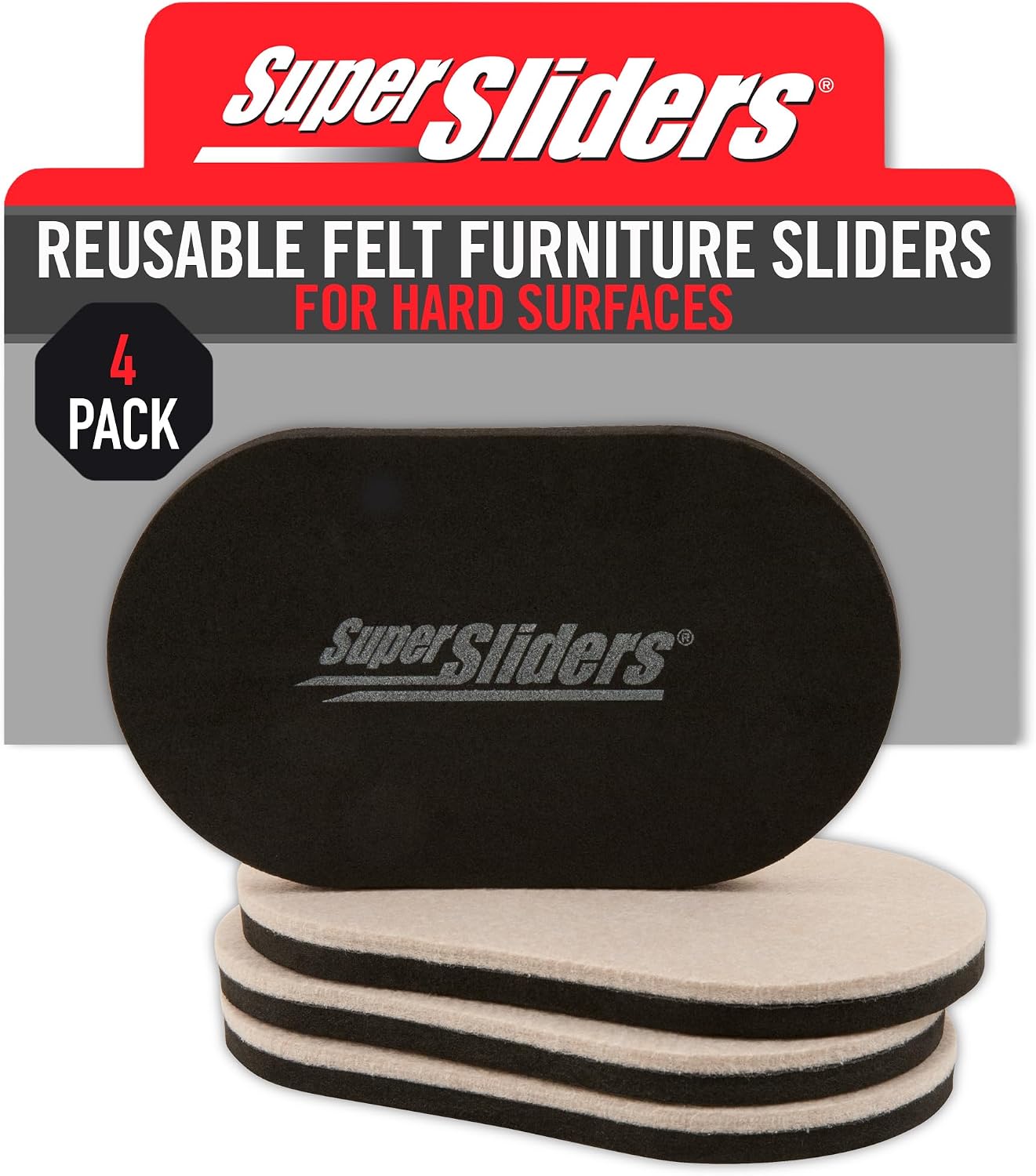
Round is not always right. Plenty of furniture stands on feet that are long and narrow: the runners under a bench, the rails beneath a console table, the angled feet of a mid-century credenza. Fit a round slider under those and you either waste surface area or leave part of the foot hanging over the edge. An oval does the job better.
These Super Sliders measure 3.5 by 6 inches, which gives you a long, smooth shape that lines up naturally with elongated feet. The curved ends also mean there are no sharp corners to catch on a rug edge or a floor seam as you push, which is a quiet benefit on floors with transitions, thresholds, or area rugs.
Why the shape matters for stability
Stability is mostly about alignment. When the long side of the slider runs along the long side of the foot, the piece sits flat and balanced. You get a wider support in the direction the furniture is most likely to rock. A tall bookcase with narrow base rails, for example, benefits from that extra length because it reduces the tendency to tip forward when you push from the top.
Everyday uses
Oval sliders shine for mid-weight household pieces. Consider a sideboard in the dining room, a TV stand that needs to be pulled out to reach cables, a hall bench, a bedroom dresser that is mostly empty, or a pair of nightstands. All of them tend to have feet or rails that suit this shape. If you are updating a bedroom and want to see which pieces are worth keeping, remember that moving furniture around is also an opportunity to measure carefully. Our guide on how to measure a room for furniture helps you confirm that a piece will fit its new spot before you start pushing.
Reusability and long-term value
Like the round version, these are designed to be reused. You can move them from the living room to the bedroom, from one house to the next, and use them for chores like cleaning under a heavy piece. If you prefer to keep them permanently under certain items, that also works for furniture you move now and then.
The felt-style contact surface keeps the glide smooth on sealed hardwood. As with all felt, check it periodically. If the surface looks matted, dirty, or embedded with debris, clean it or replace it before the next move.
What to watch for
Oval sliders are less ideal for perfectly round feet, where the round version centers more naturally. They are also not meant for the heaviest items, so check the product page for capacity guidance before you place a loaded cabinet on a set. Match the number of sliders to the number of feet, and be sure each contact point is supported.
- Size: 3.5″ x 6″ oval
- Type: Reusable sliders
- Best use: Long, narrow feet and rails
- Great for: Benches, consoles, dressers
Pros
- Oval shape fits elongated feet and rails
- Rounded ends glide past seams and rug edges
- Reusable between rooms and homes
- Gentle on finished hardwood
Cons
- Less natural fit for round legs
- Capacity is limited versus heavy-duty sets
- Surface needs periodic cleaning
Bottom line: the best pick in the Super Sliders line when your furniture rests on long, narrow feet.
Super Sliders Reusable Oval Sliders (3.5″ x 6″) – see the latest price.
Check Price on Amazon7. Super Sliders Assorted Size and Shape Value Pack

Walk through any home and you will find furniture of every size. A slim plant stand. A chunky ottoman. A bench with rails. A round coffee table. A chair with square feet. Buying a single size and shape means some of those pieces end up protected and some do not. The assorted value pack takes a different approach: it gives you a mix of sizes and shapes in one purchase.
The case for variety
For most households, the biggest challenge is not finding a good slider. It is finding the right slider for each piece. Without an assortment, you end up making a series of small purchases, or you try to force a slider that is too small, too large, or the wrong shape to work. An assorted pack lets you match slider to furniture without a shopping spree.
It also takes the guesswork out of sizing. If you are not sure whether your sofa feet are 2 inches or 3 inches across, having a few options on hand means you can test and pick the best fit. Once you know what works, you can use the rest elsewhere in the house.
Who this pack is for
This is the best choice for anyone furnishing or rearranging a full home: new homeowners, renters moving into a hardwood apartment, or people who simply have a lot of different furniture. It is also excellent for households that move often. A single assorted pack can travel with you and serve every room in the next place.
If you are planning a bigger update to your furnishings, timing matters. Moving day is also when the thought of new pieces comes up, and when is the best time to buy furniture can help you spend less if you decide to replace a few things.
Making the most of an assortment
Take ten minutes before you start. Walk through the rooms and note which pieces you want to move or protect, and what their feet look like. Round feet? Narrow rails? Wide blocks? Then lay out the sliders on the floor near each piece. Matching shapes to feet before you lift anything makes the process faster and safer.
Keep unused sliders together in a small bag or box so they stay clean. Felt and soft surfaces collect dust and pet hair quickly if they sit loose in a drawer. A sealed bag keeps them ready for the next move.
Trade-offs to keep in mind
Because the pack covers many sizes, you may not get as many pieces of any single size as you would in a dedicated set. If you need to protect twenty identical chair legs, a focused pack like the sixteen-piece X-Protector set is more efficient. And as with all general-purpose sliders, check the capacity before you place a heavy piece on any of them.
- Type: Reusable, assorted
- Includes: Mixed sizes and shapes
- Best use: Whole-home rearranging
- Great for: New homes, movers, varied furniture
Pros
- One pack covers many furniture types
- Helpful when you are unsure of the right size
- Reusable between rooms and homes
- Good value for varied households
Cons
- Fewer pieces of each individual size
- Not the best for identical rows of legs
- Heavy items still need heavy-duty options
Bottom line: the most practical single purchase if you own a mix of furniture and want to be ready for anything.
Super Sliders Assorted Size and Shape Value Pack – check price and what is included.
Check Price on Amazon8. Super Sliders XL Reusable Sliders (9.5″ x 5.75″)

Some furniture simply needs more. A deep sectional with broad corner supports. A solid wood armoire. A wide bookcase with a heavy base plinth. These pieces do not rest on legs at all, so a small slider can look lost underneath. The XL Super Sliders, at 9.5 by 5.75 inches, were built with oversized bases in mind.
Why bigger can be better
Weight distribution is the main reason. Spreading a piece’s weight across a larger surface lowers the pressure at each contact point. That reduces the risk of indenting a softer wood finish and makes the piece feel steadier as you push. A bigger pad is also less likely to tip or slide out from under the furniture when the load shifts.
The wider footprint also helps with plinths and flat bases. If your furniture sits on a solid base rather than on legs, an extra-large slider can support more of it. That keeps the load balanced and makes it easier to maneuver.
Practical use: placing XL sliders
Placement is simpler than it sounds. Empty the piece first, then tilt or lift one corner slightly using a helper or a pry bar with a protective block, and set the slider underneath. Repeat at each corner. Lower the piece gently and test the movement before you commit to pushing it a long distance. Keep a hand on the top to steer.
For very tall pieces, a second person helps keep the furniture from rocking. Never push from a low point if the piece is tall and narrow, because pushing near the base can cause a top-heavy item to pivot unexpectedly. Push mid-height or higher, and always watch where your feet are.
Beyond the living room
These large sliders are useful far beyond the sofa. Home offices often have heavy desks with solid side panels. Garages and utility rooms hold workbenches and freezers on hardwood or finished floors. Kitchens have islands and carts. If a piece has a broad base, an XL slider usually fits it better than anything smaller.
Always check the manufacturer’s weight guidance, and avoid using any slider for items that exceed it. For very heavy appliances or industrial-weight furniture, the heavy-duty options covered next may be a better match.
Storage and care
Because these sliders are larger, store them flat. Stacking them with a small piece of cloth between each pair prevents surfaces from rubbing. As with any slider that touches a hardwood floor, wipe the underside before each use and check for trapped grit. The few seconds you spend will pay off in the long run.
- Size: 9.5″ x 5.75″
- Type: Reusable extra-large sliders
- Best use: Large, heavy, wide-base furniture
- Great for: Sectionals, armoires, plinths
Pros
- Big footprint spreads weight widely
- Suits plinths, wide bases, and corner supports
- Reusable and easy to store flat
- More stable under tall pieces
Cons
- Too large for slim legs
- Fewer pieces needed but each takes space
- Still not for the heaviest appliances
Bottom line: the right tool when furniture is bulky, wide, or heavy and ordinary sliders look undersized.
Super Sliders XL Reusable Sliders (9.5″ x 5.75″) – view current pricing.
Check Price on Amazon9. EZ Moves Furniture Sliders (Heavy Furniture)

Most sliders on this list are comfortable with chairs, tables, and mid-weight cabinets. Then there is the other category: the furniture you dread moving. The solid oak dresser. The sleeper sofa. The pantry cabinet that has not budged since you bought the house. EZ Moves is positioned for that category, with heavy furniture in mind.
What “heavy-duty” should mean to you
The phrase gets used loosely, so it helps to define it. A heavy-duty slider is designed to stay stable under a large load, resist crushing or deforming, and keep gliding when a basic pad would stall. In practice, that means a firmer construction and a more substantial structure than a lightweight felt pad. It does not mean unlimited capacity. Always read the weight rating on the product page and compare it with the weight of what you are moving.
Moving big pieces the smart way
Heavy furniture rewards patience and preparation. Empty it first: drawers out, shelves cleared, doors secured. Measure the path and the destination. If the piece will pass through a doorway or around a corner, check clearances before you start, and our guide to measuring a room for furniture covers how to map the space.
Next, plan how you will get the sliders underneath. For heavy items, lifting alone is not safe. Use a second person, a furniture lifter tool, or a pry bar on a protective block to raise each corner just enough to slide the pad into place. Never put hands or feet under a raised piece. Once all corners are supported, push slowly and evenly, keeping the load centered over the sliders.
Floor-first thinking
Heavy pieces are where hardwood floors suffer most. The weight is greater, the force you apply is greater, and any mistake leaves a bigger mark. Before you move anything, sweep or vacuum the entire path, and consider laying a thin protective layer, such as a moving blanket or cardboard, along the route for extra security. Also inspect the underside of each slider and wipe it clean. Grit trapped under a heavy load will leave a scratch, no matter how good the slider is.
Who should choose this one
EZ Moves makes sense if you own large, solid furniture, are moving a big piece a long distance, or want a dedicated tool for the toughest jobs in the house. It also suits people who are planning a long-term relocation and want one set that handles the heaviest items.
For lighter furniture, it may be overkill. A simple felt pack costs less and does just as well. The goal is to match the tool to the task, and for heavy pieces this slider category is the better match.
Keeping floors safe afterward
Once the heavy piece lands where you want it, consider whether you want it to sit on sliders permanently. Most heavy furniture does not need to. Instead, remove the sliders, and place a soft felt pad under each foot or support if the piece will remain on hardwood. That gives lasting protection from daily vibration and minor shifts. If the piece will sit on bare wood for a long time, a good floor cleaner and occasional polish keep the finish healthy. Our wood cleaning guide offers a gentle approach you can adapt.
- Type: Heavy-duty sliders
- Built for: Heavy furniture
- Best use: Dressers, sofas, cabinets, large items
- Tip: Check the stated weight rating
Pros
- Designed with heavy furniture in mind
- Makes difficult moves more manageable
- Useful for long-distance rearranging
- Good for solid wood and bulky pieces
Cons
- Overkill for light chairs and tables
- Requires safe lifting technique
- Not meant for permanent placement
Bottom line: a purpose-built choice when you are facing the heaviest pieces in your home.
EZ Moves Furniture Sliders (Heavy Furniture) – check the latest price.
Check Price on Amazon10. FLERISE Moving Kit (Hard Floors)

A slider is only one piece of the puzzle when you move furniture. You also need a way to lift, steady, and position the load. That is why a complete moving kit can be more useful than a bag of pads. The FLERISE Moving Kit is built for hard floors, which makes it a natural fit for hardwood homes that want a more complete solution.
Why a kit makes sense
Anyone who has tried to move a heavy sofa alone knows the real challenge is not the gliding. It is getting the sliders under the furniture in the first place. A kit typically bundles the sliders with the tools to help you lift and place them, so you are not improvising with a broom handle or a book. That saves time, reduces the risk of injury, and protects your floors from awkward shifting while you work.
Check the product page for the exact contents of the kit, since components and quantities can change. What matters is that you get a coordinated set designed to work together rather than a stack of separate gadgets.
Using a kit step by step
Start by clearing the path. Remove rugs, cords, and decor. Empty the furniture. Clean the floor along the route. Then use the lifting tool, if included, to raise one side of the piece slightly while you place the sliders. Work from one corner to the next. When all supports are in place, test the movement with a gentle push before you guide the piece to its new position.
When you reach the destination, reverse the process: lift each corner carefully and remove the sliders. If the furniture will stay on hardwood for a long time, add a permanent felt pad to each foot so it does not need to be lifted again soon.
Best for whole-home moves and big projects
A kit is especially useful if you are moving into a new place, redoing a room, or setting up several large pieces in a single weekend. Having everything in one box means you can work faster and keep the same tools for the next project. It is also a great gift for new homeowners, who tend to move furniture constantly in the first few months.
And if your project includes refreshing the furniture itself, you can combine the move with a makeover. Our guides on how to paint furniture and the best paint for furniture help you plan a project that goes from old and tired to updated and fresh, all while your floors stay protected.
When a kit may be too much
If you only want to protect chair legs, a kit is more than you need. A felt pack is cheaper and simpler. A kit makes sense when the lifting and positioning are the biggest obstacles, not the glide itself. Be sure to read the weight guidance for each component, and do not use any tool beyond its rating.
- Type: Moving kit
- Built for: Hard floors
- Best use: Large moves and big projects
- Tip: Check the listing for kit contents
Pros
- Complete set helps with lifting and moving
- Designed for hard floors
- Saves time on big projects
- Great for new homeowners and movers
Cons
- More than needed for simple chair protection
- Takes up more storage space
- Contents vary, so check the listing
Bottom line: pick the kit when you want the full toolset for moving furniture across hard floors without damage.
FLERISE Moving Kit (Hard Floors) – see what is included and the current price.
Check Price on Amazon11. Skylarlife 16-Piece Furniture Sliders Set

The last pick on our list is a straightforward general-purpose set. Skylarlife offers sixteen pieces in one pack, which is the sweet spot for outfitting a room or two without ordering twice. If you want a flexible all-rounder rather than a specialist, this is the kind of product that earns its place in a closet.
Sixteen pieces, many uses
A set this size gives you plenty of options. Use four under a sofa, four under a bookcase, four under a coffee table, and four under a dresser. Or use all sixteen to rearrange a bedroom in one session, then pack them away. Because you have enough pieces to cover multiple pieces of furniture at once, you can move quickly without shuffling sliders back and forth.
The set is also good for people who like to keep a few sliders in reserve. If one gets lost or damaged, you still have enough to finish the job.
Balanced for a typical home
Most households do not need extreme specialization. They need something that works for the average sofa, bed, desk, and dresser. A well-rounded sixteen-piece set is built for that. It covers the common household tasks: rearranging the living room, cleaning under the bed, moving a desk, or setting up a new bookcase.
That said, it is wise to check the product page for sizes, materials, and capacity, because “set” can mean different combinations. Read the description and customer questions so you know exactly what you are getting, and match the sliders to your furniture before you buy.
Protecting your floor while you work
No slider can compensate for a dirty floor. Clean the area, and check the underside of each piece. If the surface feels gritty, wipe or vacuum it. Place sliders flat and fully under the foot. Avoid leaving a corner hanging off the edge, because that can concentrate weight and increase the chance of a scratch.
It also helps to think about direction. Pushing in a straight line along the grain of the wood is gentler than twisting or pivoting a piece over sliders. If you need to rotate furniture, lift one side slightly and shift it in steps rather than spinning the whole piece at once.
Value and who it is for
This set is a good fit if you want a solid default option, if you prefer buying a larger pack up front, or if you are building a small moving toolkit that you can pull out whenever you rearrange. It is less ideal for very heavy appliances or specialized items, where a heavy-duty slider or a full kit is the safer choice.
- Pieces: 16
- Type: General-purpose sliders
- Best use: Everyday rearranging
- Tip: Check sizes and capacity on the listing
Pros
- Sixteen pieces cover several furniture items
- Good all-round choice for typical homes
- Handy to keep in reserve
- Suitable for room-by-room rearranging
Cons
- Not specialized for very heavy items
- Contents and sizes should be verified
- Surface needs checking for grit before use
Bottom line: a dependable, no-fuss set for people who want one pack that handles most household moving jobs.
Skylarlife 16-Piece Furniture Sliders Set – check price and availability.
Check Price on Amazon12. Using Furniture Sliders the Right Way (and Mistakes to Avoid)
Even the best slider can fail if it is used carelessly. The good news is that the technique is simple, and once you have it down, you can move almost any piece of furniture across a hardwood floor without a mark. Here is the routine we recommend.
A simple routine for every move
- Plan the destination. Decide where the piece is going and measure the spot. Moving something twice defeats the purpose of protecting your floors.
- Empty the furniture. Remove drawers, shelves, books, and loose items. Lighter furniture is safer, easier to handle, and kinder to your floors.
- Clear and clean the path. Remove rugs and cords. Sweep or vacuum the entire route, including the spot where the furniture currently sits.
- Check the feet and the sliders. Wipe each slider and feel the furniture feet for burrs, grit, or sharp edges.
- Lift and place. Raise one corner slightly using a helper or a lifting tool, and set the slider fully under the foot. Repeat for each point of contact.
- Push slowly and steadily. Push from a mid-height point and keep the load balanced. Avoid sudden stops or twists.
- Remove and finish. At the destination, lift each corner and remove the sliders. Add permanent felt pads if the piece will stay.
Common mistakes
Skipping the cleaning step. This is the number one cause of scratches. A speck of grit trapped under a slider can leave a visible line. A quick sweep and wipe takes less than a minute.
Using the wrong slider for the floor. Sliders designed for carpet often have a rougher surface that is too harsh for wood. Always use felt or smooth, floor-safe sliders on hardwood.
Overloading. Pushing a slider past its stated capacity can cause it to deform, crack, or fail. Remember that capacity applies to the whole set under a piece. When in doubt, empty the furniture or choose a heavy-duty option.
Moving furniture without help. A second person improves control and safety, especially with tall or heavy items. Do not try to be a hero with a wardrobe.
Leaving worn pads in place. Felt pads wear down, compress, and collect debris. A pad that has gone hard or gritty can scratch more than bare furniture feet. Replace pads regularly, especially in high-traffic areas such as dining rooms.
Pushing on slopes or uneven floors. Sliders glide easily, which is the point. On a sloped surface or near a stair, that same ease can become dangerous. Take extra care near thresholds and steps.
Everyday protection versus moving tools
Think of your slider collection in two layers. Layer one is permanent protection: self-stick felt pads on the legs of chairs, tables, and benches that live on hardwood. Layer two is your moving kit: reusable sliders that come out when you rearrange. Together they guard your floors in daily use and on moving day.
| Situation | Our Suggested Choice | Why |
|---|---|---|
| Dining chairs scraping daily | X-Protector 16-piece felt set | Permanent, quiet protection for many legs |
| Wide sofa or bookcase feet | X-Protector 6″ x 3.5″ or Super Sliders XL | Larger footprint spreads weight |
| Round or turned feet | Super Sliders 5″ Round | Shape matches the foot |
| Long, narrow rails | Super Sliders Oval | Length aligns with the foot |
| Whole house, mixed furniture | Super Sliders Value Pack or Skylarlife 16-piece | Variety and quantity |
| Very heavy furniture | EZ Moves | Built with heavy loads in mind |
| Big move or full room project | FLERISE Moving Kit | Includes tools to lift and position |
Caring for the floor afterward
Once the furniture is in place, take a moment to inspect the floor. Look for light scuffs, and buff them gently with a soft cloth. A good cleaner and a quality polish help restore the look of the finish. Make sure whatever you use is appropriate for your floor type, whether it is sealed, oiled, or waxed, because not every product suits every finish. If you are unsure, test a small hidden area first.
Households with pets should add one more habit. Pets are often the cause of both scratches and furniture damage. Our guide on how to stop cats from scratching furniture is worth a read if you share your home with a cat, since protecting the floor and protecting the furniture often go hand in hand.
Special situations worth planning for
Rugs and thresholds. Sliders glide well on hardwood but can catch on the edge of a rug or a raised threshold. Lift the rug edge or remove it before you push, and ease the piece over thresholds slowly rather than letting momentum carry it.
Stairs and slopes. Never use sliders on stairs, and be careful near the top of any staircase. A piece that glides easily on a flat floor can run away from you on even a slight incline.
Radiant heat floors. If your hardwood has radiant heating, check that your sliders and pads are not affected by warmth, and avoid leaving soft adhesive pads under furniture for long periods without inspecting them. When in doubt, check the guidance from both the floor and slider manufacturers.
Rental homes. If you rent, protecting the floor is often the difference between getting your full deposit back and losing part of it. A pack of felt pads and a set of reusable movers is cheap insurance. Take a few photos of the floor before you move in so you can compare later.
Mixed flooring. Many homes combine hardwood with tile, vinyl, or carpet. Sliders designed for hard floors may not work as well on carpet, and the reverse is also true. If you need to move a piece across different surfaces, use the slider that suits the most delicate one, then switch if needed.
Muddy or wet conditions. After rainy days, shoes carry extra grit and moisture into the home. That is the worst time to drag anything across a hardwood floor. Wait for the surface to dry and clean it before you move heavy pieces.
How many sliders do you actually need?
A quick formula: count the contact points under each piece you plan to move, add a spare or two, and buy accordingly. Most sofas and beds need four to six. Dressers and bookcases usually need four. Chairs need four each, but you only need them while moving, so a few sets can serve many chairs. For permanent pads on dining chairs, count every leg in the room.
Build your furniture-moving toolkit. Explore sliders, kits, and felt pads for hardwood floors.
Explore Moving Kits on AmazonFrequently Asked Questions About Furniture Sliders for Hardwood Floors
1. What are the best furniture sliders for hardwood floors?
The best sliders for hardwood have a soft, smooth floor-side surface, usually felt, and a size and shape that suits your furniture feet. For everyday protection, a multi-pack of felt sliders is hard to beat. For rearranging, reusable sliders like the Super Sliders line work well. For heavy items, look at heavy-duty options such as EZ Moves or a complete moving kit.
2. Do furniture sliders scratch hardwood floors?
Properly chosen sliders do not scratch hardwood, but a dirty slider or floor can. Grit trapped under a slider can leave marks. Clean both the floor and the slider surface before every move, and avoid sliders with hard or rough undersides.
3. Are felt sliders or plastic sliders better for hardwood?
Felt is generally the safer, more gentle choice for hardwood because it is soft and cushions the contact. Smooth plastic can also work if it is designed for hard floors, but it should be checked regularly for debris. Plastic sliders made for carpet are usually not suitable for wood.
4. How do I put sliders under heavy furniture?
Empty the furniture first, then lift one corner slightly with a helper or a lifting tool and place the slider fully under the foot. Repeat at each corner. Never put your hands or feet under a raised piece. Test the movement with a gentle push before moving the piece a long distance.
5. Can I leave furniture sliders on permanently?
It depends on the product. Self-stick felt pads are designed to stay on and protect floors every day. Some reusable sliders, such as slide-and-hide styles, can be left under furniture that you move often. Heavy-duty sliders are generally meant for moving, not for permanent placement. Check the manufacturer’s guidance for each product.
6. What size furniture slider should I buy?
Choose a slider that is at least as large as the furniture foot and ideally slightly larger. Round sliders suit round feet, ovals and rectangles suit long or wide feet, and extra-large sliders suit plinths and broad bases. An assorted pack is a safe option if you have furniture of many sizes.
7. How many sliders do I need for a sofa or bed?
Count the contact points under the piece. Many sofas and beds need four to six sliders. Place one under every leg or support so the weight is evenly shared. Bring a spare or two in case you need to adjust.
8. Are furniture sliders safe for refrigerators and appliances?
Only if the product is rated for that weight and designed for appliances. Many general-purpose sliders are not. For very heavy appliances, choose a heavy-duty slider or a dedicated moving kit, and follow the manufacturer’s instructions. Be careful with water lines, gas lines, and electrical cords.
9. How do I stop furniture from sliding after I place it?
Remove the moving sliders once the piece is in position, and replace them with non-slip or felt-and-grip pads suited to the furniture. For pieces that tend to creep, consider adding a rubber-backed pad or a rug underneath. Make sure whatever you use is safe for your floor finish.
10. How often should I replace felt furniture pads?
Check them every few weeks to months, depending on use. Replace any pad that looks flattened, hard, worn through, or embedded with grit. High-traffic items such as dining chairs may need new pads more often than a rarely moved sofa.
11. Can sliders damage a floor finish over time?
Used properly, sliders protect the finish. Problems usually come from dirt, worn pads, overloaded sliders, or leaving the wrong type of slider in place for long periods. A quick inspection and regular cleaning keeps the risk low.
12. What is the easiest way to move furniture alone?
Start by emptying the piece, then use a lifting tool or a moving kit to raise each corner so you can place the sliders. Push slowly from a mid-height point. For heavy or tall furniture, get a second person. Safety matters more than speed.
Final Verdict: Choosing the Right Furniture Sliders for Your Hardwood Floors
Protecting hardwood does not take a big budget or a lot of effort. It takes the right slider in the right place, a clean floor, and a few minutes of preparation. A scratch from careless moving can cost hundreds to repair, while a pack of sliders costs very little.
If you are not sure where to begin, here is a simple way to decide. For daily protection on chairs and tables, start with the X-Protector 16-piece felt set. If your furniture has wide feet, the 6″ x 3.5″ X-Protector set or the Super Sliders XL give you more surface area. For rearranging round or oval feet, the Super Sliders round and oval sliders make the job easy, and the assorted value pack covers a mix of furniture. When you face heavy items, EZ Moves or the FLERISE Moving Kit offer the muscle, and the Skylarlife 16-piece set is a handy all-purpose option.
Pick the slider that matches your furniture, use it with care, and your hardwood will look as good in ten years as it does today.
Protect your floors today. Find the right furniture sliders for your home and start moving with confidence.
Shop the Best Furniture Sliders