

How to Stop Cats From Scratching Furniture: A Practical, Cat-Friendly Playbook
Your cat isn’t being spiteful. Scratching is a built-in need, and the fix is to meet that need somewhere other than your sofa. Here is a step-by-step plan, with diagrams, that works with feline instincts instead of fighting them.
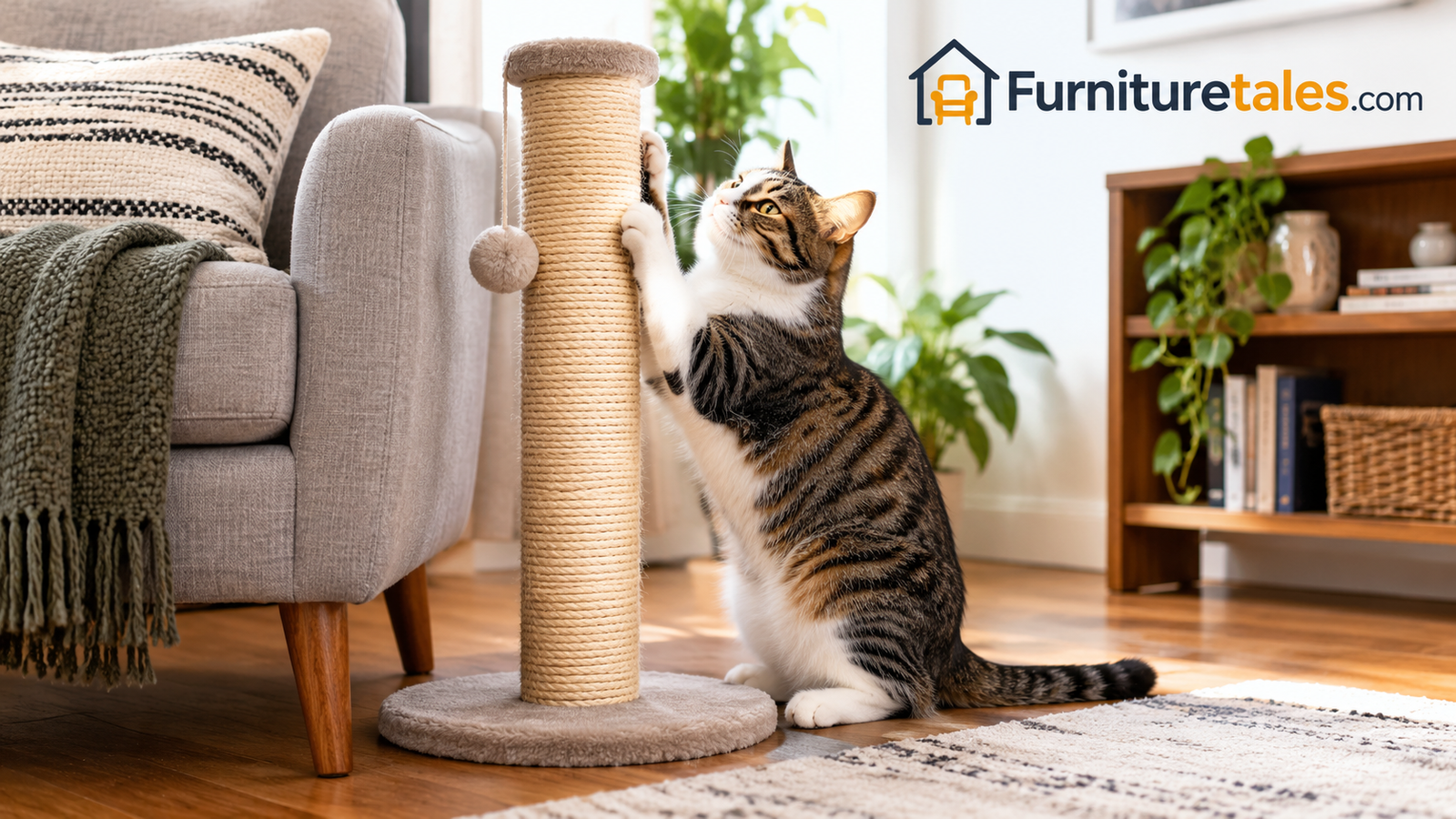
If you share your home with a cat, you have probably stood in front of a shredded sofa arm and wondered what you did wrong. The honest answer is: nothing. Cats scratch the way people stretch, talk and doodle. It is how they keep their claws healthy, mark territory, work out tension and wake up their muscles. Asking a cat to stop scratching entirely is like asking a person to stop blinking.
What you can change is where the scratching happens. This guide walks through seven concrete steps, each with its own diagram, then covers the comparison of popular deterrents, the mistakes that backfire, how the plan shifts for kittens and seniors, and how to repair the damage you already have. Work through the steps in order and most households see real change within a few weeks.
1. Why Cats Scratch in the First Place
Before you can redirect a behavior, it helps to know what is driving it. Scratching is not one habit but several overlapping needs, and your cat may be acting on more than one at the same time.
Claw maintenance
A cat’s claws grow in layers. Scratching pulls away the worn outer sheath so a sharp new claw can emerge. If you ever find tiny, crescent-shaped husks near a favorite post, that is exactly what happened. Without a rough surface to catch on, the old sheath stays put, and cats go looking for something that will do the job.
Stretching and muscle work
Watch a cat after a nap. It reaches up, digs in and pulls its whole body long, from shoulders to toes. A good scratching surface lets the cat hang its weight into the stretch. That is why tall, sturdy objects, such as the arm or back of a sofa, are so tempting: they are tall, stable and satisfyingly resistant.
Scent and visual marking
Cats have scent glands in their paws. Every scratch leaves an invisible chemical signature along with a visible mark. In a multi-cat home, or a home with a new piece of furniture that smells unfamiliar, scratching is a way of saying “this is part of my territory.” That is also why cats often scratch at the entrance to a room or beside the spot where the family gathers.
Stress release and excitement
Scratching also works as an emotional outlet. Cats often scratch when they are excited to see you, anxious about a change, or frustrated by a closed door. If scratching suddenly increases, look at what has changed in the household before assuming it is a training issue.
The key idea: every effective fix gives the cat a better place to do the same thing. Removing the behavior without offering an alternative simply moves the problem to the next piece of furniture.
With that in mind, the rest of this guide follows a simple pattern: offer the right surface, put it in the right place, make the wrong surface less appealing, protect what you cannot move, and reward the choices you want to see more of.
Why the sofa wins so often
Furniture checks nearly every box a cat could want. It is tall, heavy and stable, so it does not move when they pull. The fabric has texture that catches claws and shreds in satisfying ways. It sits in the middle of the household, where scent marking carries the most meaning. And it smells like you, which makes it feel like part of the cat’s own territory. When you understand that the sofa is simply the best scratcher in the house, the solution becomes obvious: build something better and put it next to it.
It also helps to notice your cat’s personal style. Some cats are “vertical” scratchers who stretch up and rake downward. Others are “horizontal” scratchers who flatten out and dig at rugs or mats. A few like both. Keep a loose note for a week of where, when and how your cat scratches, and the pattern will point you to exactly the type of scratcher and the exact location that will work.
Start with the basics: browse sturdy, tall scratching posts and scratchers cats actually use.
See Scratching Posts on Amazon2. Choose the Right Scratching Post
Most scratching problems are really scratching-post problems. A wobbly, short or oddly textured post will lose to a solid sofa every time. Cats choose surfaces by feel, so your job is to out-compete the furniture on every measurable point.
Height and stability
Choose a vertical post tall enough for your cat to stretch fully with front paws high and body extended. For most adult cats, that means at least thirty inches. The base should be wide and heavy so it never rocks. One scare from a toppling post can put a cat off scratchers for weeks.
Material and texture
Sisal rope and sisal fabric are the usual favorites because they shred satisfyingly under claws. Corrugated cardboard is a cheap, popular alternative, especially for horizontal scratchers. Carpet-covered posts are the one to be careful about: they look like your actual carpet and can teach a cat that carpet is fair game.
Orientation: vertical, horizontal or angled
Watch how your cat currently scratches. If they hit the side of the sofa, give them a vertical post. If they rake the rug or a flat cushion, choose a horizontal pad. Some cats love an angled ramp. Offering two or three shapes in the first month tells you what your cat actually prefers, and you can double down on the winner.
- Match the surface: if the cat shreds fabric edges, try sisal fabric; if they dig at the carpet, try a flat cardboard scratcher.
- Size up: large breeds need extra-wide, extra-tall posts.
- Think permanent: replace worn posts before they are bare, because a shredded, flat surface stops being rewarding.
Pros of tall sisal posts
- Support a full-body stretch
- Last longer than cardboard
- Mimic tree bark
Cons to consider
- Take up floor space
- Cheap versions wobble
- Not every cat likes vertical
How to tell if a post is high quality
Give any post the “shove test” before you buy. Push firmly on the top; if it rocks, shifts or wobbles, a cat’s full body weight will do much worse. Check that the wrap is tight and that the sisal is thick enough to shred without exposing glue. Look at the base: a wide, flat, weighted base wins over a narrow one every time. If the post is part of a tree, make sure the platforms are anchored and the column is thick enough to resist twisting.
Keep a rotation going
Cats like novelty. A scratcher that was exciting in week one can become background furniture by month three. Keeping a spare cardboard scratcher in a closet and swapping it in every few weeks keeps things fresh and costs very little. If a favorite post is looking ragged, do not throw it out right away. Many cats prefer a well-worn surface with plenty of shreds to a pristine one, as long as it is still stable.
Not sure which style your cat will pick? Try a tall sisal post and a flat cardboard scratcher side by side.
Shop Tall Sisal Posts3. Put the Scratcher Where the Scratching Happens
A perfect post in the wrong spot is wasted. Cats scratch in specific places for specific reasons: right after waking, beside their favorite resting spot, and on the most visible surfaces in a room. Place the alternative exactly where they already scratch, then gradually move it if you need to.
Follow the scratch marks
Walk around your home and note where the damage already is. The sofa corner by the window, the armchair near the entry, the bed frame: these are your target zones. Set the new scratcher directly in front of or beside each one, ideally touching the furniture so the cat cannot reach the old surface without passing the new one.
Think in social spaces
Cats scratch where the family is, because marking a shared space matters. A post tucked away in a spare room is much less appealing than one next to the sofa where you watch television. If you are using this as a chance to rethink your layout, our guide on how to arrange living room furniture has ideas for carving out a cat corner without crowding the room, and how to measure a room for furniture helps you check that a tall post will actually fit.
Add one near sleeping spots
Many cats scratch right after waking up. Place a scratcher beside their bed, the cat tree or the sunny window spot where they nap, so their first stretch of the day lands on the right surface.
- Identify the two or three most damaged pieces of furniture.
- Place a scratcher in contact with each one.
- Leave it there for several weeks until it is used consistently.
- Only then, move it a few inches per day toward its permanent home.
Create a scratching “station” instead of a single post
Rather than relying on a lone post, build a small zone with a vertical post, a flat scratcher and a cozy perch all within a couple of feet of each other. Cats like to scratch, then stretch, then settle down, and a station allows that whole sequence to happen in one spot. It also gives you more chances to reward your cat for choosing the right surface.
If your cat scratches doorways or the corner of a wall, consider a flat scratcher that hangs on the door handle or a tall post at the corner. Think about the route your cat walks through the home each morning, and place a scratcher on that path. A good rule of thumb is to put one wherever you hear the sound of claws more than twice a week.
Short on floor space? Wall-mounted and over-the-door scratchers keep the furniture safe without crowding the room.
See Wall Scratchers4. Make the Furniture Unappealing
Once a good scratcher is in place, the next move is to make the old target less rewarding. The principle is simple: cats avoid surfaces that feel strange, sticky or unstable under their claws. You are not punishing anything. You are just making the sofa a poorer choice than the post.
Double-sided tape and sticky sheets
Cats dislike the tacky feel on their paws. Pet-safe double-sided tape or sticky sheets applied to the scratched area work well for many cats. Cover the whole zone, not just a stripe, because a clever cat will scratch next to it. Leave it in place for a few weeks, long enough to build a new habit, and then try removing it.
Slippery or crinkly coverings
Plastic sheeting, foil and similar slick or noisy materials change how the surface feels and sounds. They are not pretty, but they are quick, cheap and temporary. Fabric-friendly options such as clear corner guards are a tidier alternative if you want something that looks acceptable in a living room.
Scent-based deterrents
Many cats dislike the smell of citrus. A cat-safe citrus-scented spray on the furniture can discourage scratching. Test it on a hidden patch first, since sprays can mark some fabrics, and never use essential oils that are toxic to cats. When in doubt, choose a product made for pets and read the label.
Safety note: many essential oils, including tea tree and some citrus oils, are harmful to cats. Stick to commercial products labeled as pet-safe, and ask your vet if you are unsure.
Pair the “no” with a clear “yes”
A deterrent on its own just teaches a cat to move somewhere else. Pair every sticky or scented barrier with a nearby scratcher, and make sure the scratcher is treated generously with praise and treats during the first week. The cat should learn: sofa is sticky and boring, post is solid and rewarding.
How long to leave deterrents in place
A common mistake is removing a deterrent as soon as the cat stops scratching. Habits are formed by repetition, and the opposite is also true: it takes repetition to unlearn a favorite surface. Keep sticky strips or covers in place for at least three to four weeks after the last scratch on the furniture. Then take away one piece at a time, watching for any return of the behavior. If your cat goes back to the old spot, restore the barrier for another couple of weeks and make sure the scratcher is still appealing.
Test before you commit
Every fabric reacts differently to adhesives and sprays. Try any product on a hidden area, such as the underside of a cushion, and check it after a day. If your furniture is delicate, choose products with a removable backing, and consider a throw or guard that sits over the surface without touching the fibers directly.
Pet-safe double-sided tape and furniture guards are a low-cost starting point.
Shop Scratch Deterrent Tape5. Protect the Furniture Itself
Training takes time, and in the meantime your sofa still needs to survive. Physical protection buys you that time. The best options are discreet enough to leave in place permanently if you like them.
Clear corner guards
Transparent guards attach over a corner or arm and take the hits instead of the fabric. They are nearly invisible and useful for cats who hit the same spot every time. Choose adhesive-free versions if you rent or worry about residue on upholstery.
Slipcovers and throws
A snug slipcover turns a precious sofa into a replaceable one. Tightly tucked throws are the lightweight version: they cover the tempting arm or back, and you can wash them. Pick tightly woven fabrics, because loops and loose knits catch claws and become the very thing your cat wants to shred.
Pay attention to the floor
If your cat scratches the area beneath the sofa or around chair legs, protectors for the legs and a firm rug underlay can help. And if scratching goes hand in hand with a cat shoving heavy furniture around, felt-backed furniture sliders for hardwood floors make rearranging easier without gouging your floor, which is handy when you are building your cat corner.
Choose cat-resistant materials when you buy
If you are shopping for new pieces, tightly woven microfiber, performance fabrics and leather alternatives resist snagging better than loose weaves, bouclé or chenille. If you have a cat today, factor that into the purchase, and see our notes on when is the best time to buy furniture to time a replacement for the best price.
| Fabric | Cat resistance | Notes |
|---|---|---|
| Tight microfiber | High | Hard for claws to hook; easy to wipe clean |
| Performance weave | High | Durable and stain-resistant |
| Faux leather | Medium | Can scratch or puncture; hides fur easily |
| Bouclé or chenille | Low | Loops catch claws and unravel |
| Loose linen blends | Low | Threads pull easily |
Making protection look good
Protection does not have to look like a compromise. A well-chosen throw in a texture that matches your decor can look intentional and cozy. Structured slipcovers in neutral colors hide fur and wear. Clear guards can be trimmed to size so they sit neatly along an arm or corner. Consider coordinating with your cat’s scratcher, so the room still feels designed rather than defended.
If you have a sectional or several chairs, prioritize. Protect the one or two pieces your cat targets most and trust the rest to the new routine. Over-covering the entire room can make your home feel like a storage unit and is rarely needed once training starts to work.
Washable slipcovers and clear corner guards keep scratching damage off the sofa while you train.
Browse Furniture Protectors6. Keep Claws Trimmed or Capped
Trimmed claws do far less damage when a scratch does land on the wrong surface. This is the most underrated step in the whole plan because it works immediately, requires no training and costs almost nothing.
How to trim safely
Hold the paw gently, press the pad to extend one claw and look for the pink quick inside it. Snip just the sharp, clear tip. Do a claw or two at a time if your cat gets restless, finishing with a treat so nail care stays a positive routine. If you are unsure, ask your vet or groomer to demonstrate once.
Soft nail caps
Soft vinyl caps glue over each claw and blunt it completely. They are a reasonable option for destructive scratchers, or for homes with expensive furniture, and need replacing every few weeks as claws grow. Introduce them slowly and watch that your cat does not chew them off.
What about declawing?
Declawing is not a nail trim. It removes the last bone of each toe and can cause chronic pain and behavioral problems. It is banned or heavily restricted in many places and is opposed by major veterinary organizations. Everything in this guide is meant to make it unnecessary.
Pros of regular trims
- Immediate damage reduction
- Cheap and quick
- Protects skin and sofas alike
Cons
- Needs a calm routine
- Must be repeated
- Doesn’t change where the cat scratches
Building a calm nail-trim routine
Start by simply touching your cat’s paws during cuddles and rewarding them with a treat. After a few days, gently press a pad to extend a claw, then release and reward. Only when your cat is relaxed with this should you introduce the clippers, letting them sniff the tool first. Pick a moment when your cat is sleepy, such as after a meal, and keep sessions to a minute or two. If your cat resists, stop and try again later. Rushing makes the next session harder.
Good lighting helps you spot the quick, especially on dark claws. A small flashlight held behind the claw can reveal the pink area. If you accidentally nick the quick, a bit of styptic powder stops bleeding quickly, and your cat will recover in moments. Keep some on hand.
A sharp, cat-specific clipper makes trimming faster and less stressful for everyone.
Shop Cat Nail Clippers7. Train With Rewards, Not Punishment
Cats learn quickly from what works for them and very slowly from what frightens them. Positive reinforcement is the single most reliable training tool you have, and it takes only a few minutes a day. The idea is to make the scratching post the most rewarding place in the room.
Make the post irresistible
Rub a pinch of dried catnip or a silvervine stick on the surface, drag a wand toy up the post, or hide a favorite treat near the base. Whenever your cat sniffs or touches the post, say something cheerful and offer a reward. The reward must come within a couple of seconds, or your cat will not connect it to the action.
Guide, don’t force
Never grab your cat’s paws and push them down on the scratcher. This is unpleasant for the cat and teaches them to avoid the post. Instead, run your own fingernails lightly down the sisal so the sound catches their attention. Many cats join in out of curiosity.
Interrupt gently, redirect calmly
If you catch your cat scratching the sofa, avoid shouting, spraying water or banging objects. Those methods teach a cat to scratch when you are not looking. Instead, calmly pick the cat up or call them, carry them to the scratcher and reward them there. It sounds slow, but consistent redirection is exactly how habits shift.
Be consistent across the household
Everyone in your home must follow the same plan. If one person redirects while another ignores the behavior, progress stalls. A short note on the fridge listing the three rules, post goes here, treats for the post, tape stays put, keeps everyone on track.
A simple five-day training rhythm
Days one and two: place the post by the target furniture and reward any interest, even a sniff. Days three and four: use a wand toy to lure your cat up the post and reward the first scratch. Day five onward: reward spontaneous scratching and keep treats handy near the post for several weeks. Fade the treats slowly, replacing some with praise and play, until the post becomes a normal part of life.
Timing is everything. If you give a reward a few seconds late, you may be rewarding the walk away from the post. A small container of treats kept near the scratcher lets you respond instantly, and a quiet “good” or a gentle stroke works well for cats who are not food-driven.
Wand toys, silvervine and catnip make a scratching post far more tempting during training.
Shop Cat Training Toys8. Enrich the Home and Reduce Stress
A bored or anxious cat scratches more, and often more destructively. Enrichment gives your cat other outlets for their energy, and a calmer cat is much easier to train. Think of this step as filling the gaps in your cat’s day so scratching is not the only entertainment in town.
Give vertical space
Cats feel safer when they can climb and observe from above. A sturdy cat tree doubles as a scratching station and a lookout. Place it near a window so your cat can watch birds and the street. A tall tree is also a great way to claim a corner of the living room for the cat instead of fighting for the sofa.
Schedule daily play
Aim for two short play sessions a day, ending with a small meal if possible. Hunting, catching and eating mirrors a cat’s natural rhythm. Many scratching sessions are really pent-up energy, so a tired cat is far less likely to attack the upholstery at three in the afternoon.
Calming aids
If a household change, such as a move, new baby or visitor, seems to have triggered more scratching, try synthetic feline pheromone diffusers, hiding spots and predictable routines. If stress seems severe or your cat shows other changes in behavior or appetite, check in with your vet to rule out health problems.
Rotate toys and surfaces
Cats get bored with the same objects. Swapping toys weekly and refreshing scratchers keeps things interesting. A worn scratching post is also a sign it needs replacing, because a bare, wobbly post is no more exciting than your sofa.
Food puzzles and mental stimulation
Puzzle feeders and treat balls turn mealtime into a hunt, which burns energy and engages the brain. Try hiding small portions around the room so your cat has to search. Window bird feeders, a cat-safe garden of cat grass and a rotating basket of toys also keep interest high. A cat with plenty to do is rarely the cat that destroys the sofa.
Respect personal space
Cats that cannot retreat can become tense, and tension shows up in scratching and marking. Give every cat in the home a quiet place, high or hidden, where they will not be disturbed. Multiple litter boxes, water bowls and resting spots reduce competition, which lowers stress and the urge to mark territory on the furniture.
A sturdy cat tree gives your cat a place to climb, nap and scratch, all in one spot.
Browse Cat Trees9. Scratching Solutions Compared
With so many products on the market, it is easy to over-buy. Here is a quick comparison of the most common approaches, so you can mix a few that suit your home rather than buying everything.
| Solution | Best for | Effort | Cost | Watch out for |
|---|---|---|---|---|
| Tall sisal post | Vertical scratchers | Low | $$ | Wobbly bases |
| Cardboard scratcher | Horizontal scratchers | Low | $ | Needs replacing |
| Cat tree | Multi-purpose, multi-cat homes | Medium | $$$ | Needs space |
| Double-sided tape | Short-term deterrent | Low | $ | Residue on some fabrics |
| Corner guards | Predictable scratch spots | Low | $ | Fit and adhesive |
| Slipcovers | Whole-sofa protection | Medium | $$ | Needs washing |
| Nail caps | Destructive scratchers | Medium | $$ | Re-apply regularly |
| Regular trims | Every cat | Low | Free | Cutting the quick |
A sensible starter combo
For most households, the winning combination is a tall sisal post next to the damaged furniture, a few weeks of double-sided tape on the target area, regular nail trims and a few minutes of daily play. Add corner guards or a slipcover if you have a particularly valued piece, and a cat tree if your cat is climbing the curtains as well.
Where to invest
- A solid, tall scratcher
- Nail trimming tools
- Daily play toys
Where to save
- Fancy gadgets with motion alarms
- Single-use sprays you do not need
- Decorative posts that wobble
Budget, mid-range and premium paths
On a tight budget, begin with a corrugated cardboard scratcher, double-sided tape and a nail clipper. You can solve a surprising number of problems for the cost of a few cups of coffee. In the mid-range, a tall sisal post with a heavy base, corner guards and a washable throw gives you lasting protection. At the premium end, a multi-level cat tree with replaceable sisal, high-quality slipcovers and a calming diffuser create a whole cat-friendly zone. Whatever the budget, the thing that matters most is consistency.
Start with the essentials: a sturdy post, a flat scratcher and a pet-safe deterrent.
Compare Cat Scratchers10. Mistakes That Make Scratching Worse
Most of the frustration around scratching comes from a handful of common missteps. Avoid these and you will save weeks of effort.
Punishing the cat
Yelling, squirting water or tapping the cat on the nose does not teach “don’t scratch the sofa.” It teaches “my person is scary,” and scratching moves out of sight. Stress can also increase marking behavior, which makes the problem worse.
Offering one boring post
A single short post in a back room will not compete with an entire living room of tempting furniture. Offer variety, in height, texture and angle, and place them where your cat actually spends time.
Moving the post too soon
Once your cat starts using the post, it is tempting to shuttle it to a better-looking corner. Shift it slowly, a few inches a day, or the cat will simply return to the original target.
Removing deterrents too early
Habits take weeks to settle. If you take the tape off after seven days, you invite relapse. Wait until the post is consistently used for at least a few weeks, then remove the barrier gradually, one piece at a time.
Ignoring a sudden change
If a previously well-behaved cat suddenly scratches more, look for causes: new pets, a move, a new piece of furniture, a loud neighbor, or discomfort from claws or joints. A short chat with the vet can rule out health factors.
Buying purely on looks
Designer posts that look good beside the sofa but wobble are a false economy. Your cat will not use something unstable. Choose function first, then look for the best-looking sturdy option.
Expecting instant results
It is easy to quit if the first week does not produce a miracle. Behavior change in cats is gradual, and some days will feel like a step back. Track progress by counting new scratch marks per week on furniture compared with the post. Even a modest drop means the plan is working and just needs more time.
Skipping the vet when something seems off
Excessive scratching, especially combined with limping, over-grooming or changes in behavior, can have medical causes such as skin irritation, joint pain or anxiety. A vet visit costs far less than months of trial and error, and it protects your cat’s wellbeing.
Choose function first: look for heavy bases and rough sisal wrap on any post you buy.
See Heavy-Duty Posts11. Kittens, Adults and Senior Cats: Adjusting the Plan
The basic approach stays the same at every age, but the details shift as your cat grows. A plan that works for a six-month-old kitten may be wrong for a twelve-year-old who has arthritis.
Kittens
Kittens are easiest to train because they have no entrenched habits. Introduce scratchers from the first week home, keep them within a few steps of the kitten’s play area and reward every visit. Choose smaller posts that a kitten can climb, and upgrade as they grow. Trimming claws early also teaches them to accept handling.
Adult cats
An adult cat with long-standing habits needs more patience. The sequence of placement next to the target, a deterrent on the old surface and a reward for the new one still works, but expect to maintain it for a month or longer. If your cat has favorite textures, try to mimic them in the scratcher.
Senior cats
Older cats often scratch less vertically and prefer stable, low, horizontal or slightly angled surfaces they can use without jumping. Joint pain can make stretching difficult, so a ramp-style scratcher or a sturdy pad on the floor is kinder. Claws on senior cats can also become thick and overgrown, so regular trimming matters more than ever.
Multi-cat households
With several cats, you need several scratching stations placed in different areas. Cats mark territory by scratching, and some will feel uncomfortable using a post another cat has claimed. Spread out posts, offer at least one per cat plus a spare, and watch for tension around shared furniture.
Renters and small spaces
If you rent, favor guards that do not leave residue and posts that do not need to be fixed to a wall. For small spaces, a tall slim post, a wall scratcher or a scratcher built into a cat shelf frees up the floor. Measure before you buy; our guide to measuring a room for furniture works just as well for cat furniture.
Rescue and shelter cats
Newly adopted cats may scratch more in the first weeks as they settle in and learn the scent map of a new home. Put scratchers in each room they have access to, keep routines predictable and reward early use of the posts. Many rescued cats have never had a proper scratcher, so be patient and demonstrate how it works with a gentle scratch of your own fingernails.
Cats that scratch when excited
Some cats scratch the moment you come home or reach for a food bowl. Place a scratcher near the door or feeding area, so excitement has a built-in outlet. Greeting your cat calmly and offering a toy or treat at the post turns an old habit into a happy ritual.
Low, stable scratchers suit seniors and small spaces, and kittens love compact posts with toys attached.
Shop Ramp and Floor Scratchers12. Repairing the Damage Already Done
Scratch marks are not always a lost cause. Once the behavior is under control, you can restore most furniture to a decent state, and a repaired surface is less tempting for returning claws than a ragged, frayed one.
Wood furniture
Light surface scratches in finished wood often disappear with a wax filler stick or a touch-up marker matched to the finish. Deeper gouges may need wood filler, light sanding and a refinish. Start by cleaning the area following our guide to how to clean wood furniture, then polish the surface with one of the options in our roundup of the best furniture polish to blend the repair.
Painted furniture
For painted pieces, light sanding and a fresh coat can erase chips and scratches. Our walkthrough on how to paint furniture covers the process, and the best paint for furniture picks include durable finishes that stand up better to future claws.
Fabric upholstery
Pulled threads can be gently tucked back with a needle or snipped flush, never yanked. Small holes may be patched with iron-on fabric or upholstery thread. For heavy damage, a professional upholsterer or a slipcover is often the most cost-effective choice.
Leather and faux leather
Light scratches in leather can often be buffed out with a leather conditioner. Deeper scratches may need a leather repair kit with a color-matched filler. Faux leather is harder to fix, so a cover is usually a better fit.
Remove the scent
An enzymatic cleaner helps remove the scent markers your cat has left, which discourages return visits. Avoid ammonia-based cleaners, since the smell can resemble urine and encourage marking.
Tip: repair the area only after you have put protection and a scratcher in place. Fresh, smooth surfaces are exactly what an unreformed scratcher loves to test.
When to call a professional
For valuable antiques, large tears in leather or damaged structural frames, a professional restorer is often the wisest investment. They have the tools and color-matching skills to hide damage that DIY kits cannot. For everyday pieces, a careful DIY repair and a cover is usually enough. Whichever route you choose, remember that a protected, repaired piece with a nearby scratcher is a tidy, long-term solution.
Prevent a repeat
Once repairs are finished, keep the scratcher beside the piece for a few more weeks, and consider a clear guard over the area. Regular nail trims and a steady play routine round out the system, so you will not be repairing the same corner again next season.
Wax filler sticks, touch-up markers and enzymatic cleaners handle most everyday cat damage.
Shop Scratch Repair KitsFrequently Asked Questions
Why does my cat scratch the sofa right in front of me?
Often it is a mix of marking, stretching and seeking attention. Cats scratch where the family spends time, and if scratching has ever earned a reaction from you, it can become a way of getting noticed. Redirect calmly and reward the scratcher instead.
How long does it take to stop a cat from scratching furniture?
Many cats show improvement within two to four weeks if the post is well placed and the sofa is protected. Older habits can take a couple of months. Consistency matters more than speed.
What is the best material for a scratching post?
Sisal rope and sisal fabric are the usual favorites because they hold up and feel satisfying. Cardboard works well for horizontal scratchers. Avoid carpet-covered posts, which can confuse cats about your actual carpet.
Does double-sided tape really work?
For many cats it does. The tacky feel is unpleasant, so they move on. It works best when paired with a nearby scratcher and kept in place for several weeks.
Is it okay to use a spray bottle on my cat?
It is not recommended. Water sprays can scare cats, damage trust and teach them to scratch when you are not around. Positive redirection is more effective and kinder.
Should I trim my cat’s claws myself?
Yes, most owners can learn it easily. Trim only the clear tip, avoid the pink quick and keep sessions short and rewarding. Ask a vet or groomer to show you the first time if you are unsure.
Are nail caps safe for cats?
Soft nail caps are generally considered safe when fitted properly and replaced regularly. Watch for chewing and for skin irritation, and remove them if your cat is distressed.
Why does my cat ignore the scratching post?
Common reasons are wobbliness, wrong height, wrong texture or poor placement. Try a taller, sturdier post right beside the furniture they currently scratch, and add catnip or a wand toy to build interest.
Will catnip or silvervine help?
They can make a post more attractive, especially in the first weeks. Not every cat responds to catnip, so silvervine is a useful alternative.
What if my cat scratches only at night?
Night scratching is often linked to excess energy or boredom. Try a play session and meal before bed, and place a sturdy scratcher near the sleeping area.
Is declawing a good solution?
No. Declawing is a surgical amputation that can cause pain and lasting behavior problems, and many veterinary groups oppose it. The steps in this guide are a humane alternative.
When should I see a vet about scratching?
If scratching suddenly increases, becomes obsessive, or comes with changes in appetite, litter box habits or mood, schedule a checkup to rule out health causes and stress.
Conclusion: A Home You Both Enjoy
Stopping a cat from scratching furniture is less about stopping and more about steering. Offer a tall, steady scratcher, put it right where the action is, make the old target dull and sticky, protect what you must, keep claws trimmed, reward the right choices and keep your cat’s days interesting. Do those things consistently and most cats switch to the new surface faster than their owners expect.
Be patient with setbacks, never punish, and celebrate small wins, such as the first time you spot a scratch mark on the post rather than the sofa. Your cat gets to keep a natural, healthy behavior, and you get to keep your furniture.
Ready to get started? Pick a sturdy post, a deterrent and a clipper, and begin Step 1 today.
Find Your Cat’s Perfect Scratcher